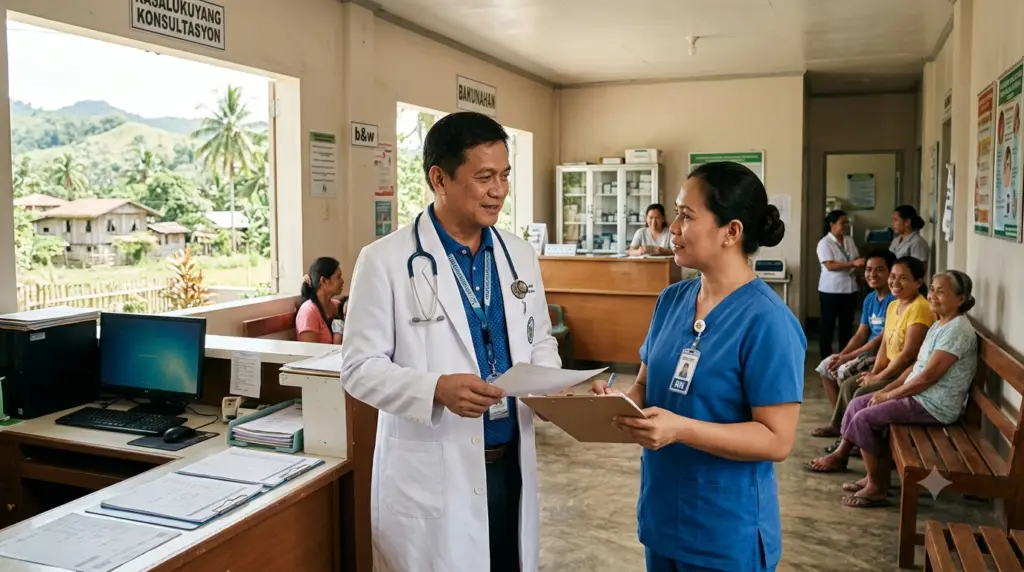
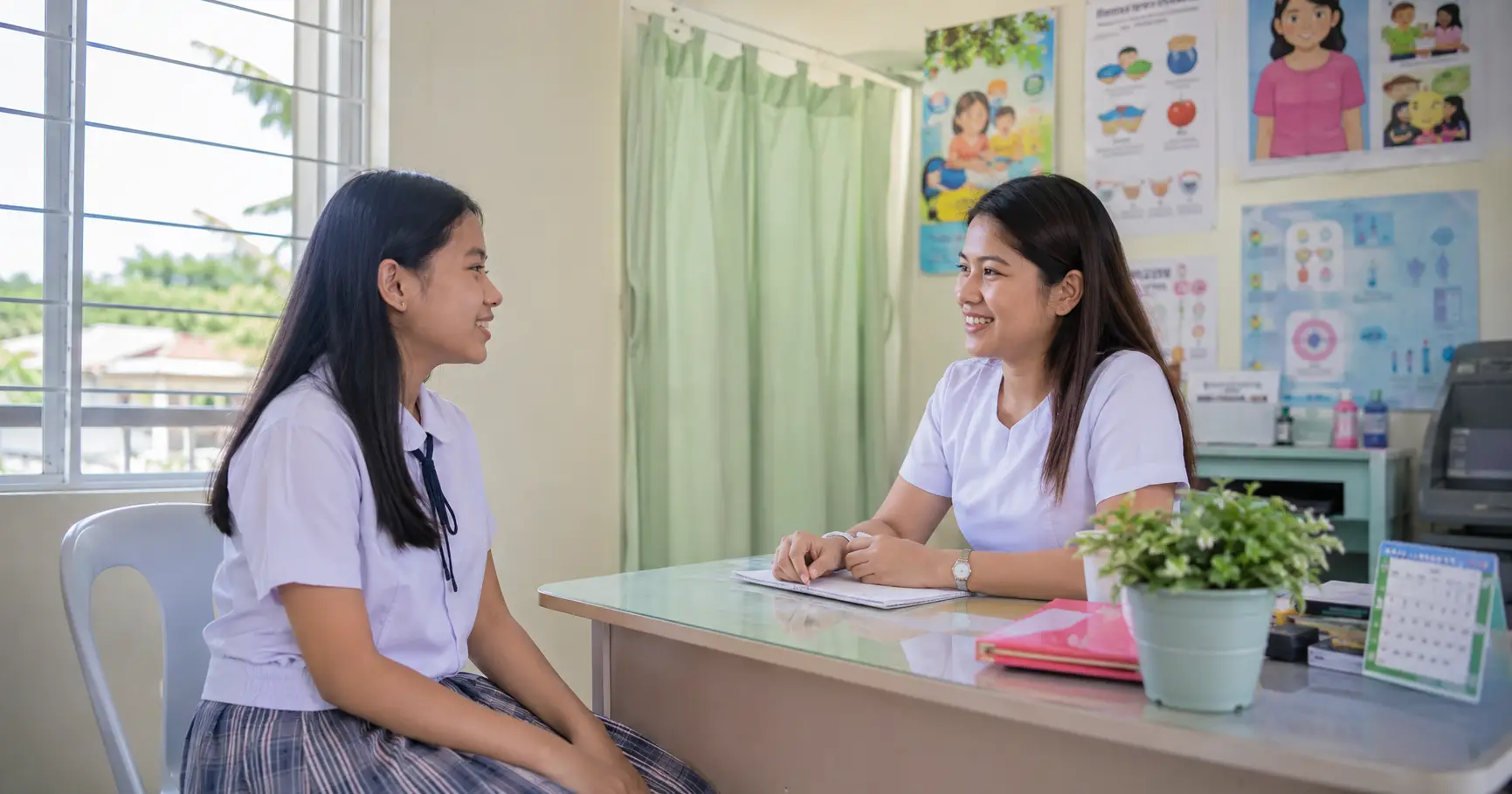
The Philippines had 704 certified Adolescent-Friendly Health Facilities as of August 2023, the most recent publicly available national count. The three-level certification program has been in place since 2013. The legal framework is comprehensive. The international standards it draws from are among the most robust in global health. And yet field research consistently documents the same result: adolescents visit a certified facility and receive exactly the same experience as every other patient. The same queue, the same room, the same assumptions, the same judgment. Certification is not the same as care. This article examines why the gap exists, what the evidence says about its causes, and what closing it actually requires.
Adolescents aged 10 to 19 make up approximately 19 percent of the Philippine population. They are not small adults. Their health needs, communication styles, decision-making capacities, and vulnerabilities are distinct from those of every other age group served by the public health system. The Philippine health system, however, was built for adults and young children. RHUs process all patients through the same flow. Consultation rooms are shared. Records are aggregated. The service experience is uniform.
The consequences of this mismatch are well-documented. The Philippines has an adolescent fertility rate of 56 per 1,000 women aged 15 to 24. Teenage pregnancy increased from 9.9 percent in 2008 to 10.1 percent in 2013 and has remained persistently high. Sixteen percent of abortion attempts occur among teenagers. Three percent of young people aged 15 to 27 have attempted suicide. HIV and STI cases among youth are rising. These are not problems of clinical incapacity. They are problems of access, of willingness, and of trust, and all three are shaped by the service environment adolescents encounter when they seek care.
Research consistently shows that adolescents avoid health facilities when they fear judgment, when they lack privacy, when they are required to bring a parent, or when they simply do not know that a service designed for them exists. A 2023 field study in Batangas province summarized what adolescents reported: they were afraid of being scolded by health care workers, afraid of being exposed to others in the reception area, and unsure of who to approach for their health needs. These barriers do not require expensive solutions. They require a deliberately different approach to service design, one the Philippines attempted to build through the Adolescent-Friendly Health Facility program.
https://doh.gov.ph/uhc/health-programs/adolescent-health-and-development-program/
The AFHF program rests on a substantial legal foundation. Understanding the framework matters because it clarifies both what the program was designed to accomplish and where the accountability gaps lie when it fails to deliver.
This is the primary instrument governing the AFHF program. It applies to the entire public and private health system, covering DOH bureaus, Centers for Health Development, hospitals, attached agencies, local government facilities, and external development partners. It targets adolescents aged 10 to 19 and aims to achieve seven health outcomes: healthy development, healthy nutrition, sexual and reproductive health, reduction of substance use, reduction of injuries, reduction of violence, and mental health. The AO mandates that facilities meeting the AFHF standard be established and maintained nationwide. It is not advisory. It is policy.
The Responsible Parenthood and Reproductive Health Act guarantees universal access to reproductive health care services including adolescent counseling and age-appropriate reproductive health education. Its Implementing Rules and Regulations, however, create a documented tension with adolescent-friendly principles. Section 4.07 requires written parental consent before minors can access family planning services in public health facilities. This provision, embedded in law, directly contradicts the confidentiality principle that defines an adolescent-friendly service. Health workers who understand AFHF standards but are operating under the RH Law are placed in an impossible position, and in practice, they resolve it by applying the law rather than the standard.
DM 2017-0098 is the operational heart of AFHF certification. It defines the three-level accreditation system and provides the formal checklists used by LGUs and DOH to assess facilities. It remains the definitive standard against which all AFHF certifications are measured. It also has a critical weakness: it does not treat judgmental provider behavior as a disqualifying finding. A facility where staff make openly judgmental comments to adolescent patients can still pass its assessment if the physical and administrative requirements are met.
Under DM 2017-0098, the Philippines uses a three-tiered accreditation model. Each level builds progressively on the requirements of the previous one. As of August 2023, the most recent publicly available national count, the DOH had certified 704 AFHFs nationwide: 617 at Level I, 52 at Level II, and 35 at Level III. The DOH has set a target of at least a 20 percent increase per year. A 2025 report has been referenced in DOH Freedom of Information responses but has not been publicly released as of mid-2026.
Adolescent-friendly space with audio-visual privacy. Signage, posted clinic schedule, basic services, one trained staff member, logbook, quarterly report. Assessed by LGU with DOH validation.
Separate consultation and counseling rooms (curtains acceptable if rooms are unavailable). IEC materials, outreach plan, referral logbook, training certificates, confidentiality policy posted, locked records. Must be Level I certified first.
Dedicated adolescent health zone or teen center within the facility. Full service package on-site, active youth participation, formal SDN, comprehensive M&E. Receives a trophy and PHP 100,000 award. Must be Level II compliant first.
A critical clarification on physical space requirements: a standalone or separate building is not required under any AFHF level. What the DOH mandates is functional privacy, meaning visual privacy (cannot be seen) and auditory privacy (cannot be heard). The principle is functional, not architectural. Level I requires a designated adolescent-friendly space. Level II requires separate rooms or curtained partitions. Level III requires a dedicated adolescent health zone. This distinction matters because it removes the most common excuse LGUs offer for non-compliance: that they lack the infrastructure.
https://doh.gov.ph/press-release/DOH-recognizes-adolescent-friendly-health-facilities/
The gap between what the AFHF certification system requires and what adolescents actually experience is not a matter of interpretation. It is documented in field studies, provider interviews, and DOH's own program reviews. Five failure patterns recur consistently across the evidence.
The most pervasive and documented problem is that adolescent health services disappear into routine RHU operations. When an adolescent visits a certified facility, they are processed identically to any adult patient. There is no separate queue, no dedicated time slot, no distinct service modality. A 2023 study conducted across 12 district hospitals in Batangas province captured the dynamic directly from a nurse: that instead of providing the appropriate adolescent intervention, staff are forced to do what is routine, because they are not equipped to serve adolescent clients differently.
While DM 2017-0098 requires privacy, the documented reality is stark. Numerous health centers lack private consultation rooms for adolescents. Where curtains are used, conversations remain audible. Receptionists routinely ask adolescents to state the purpose of their visit in public reception areas. The Batangas study documented the phrase used directly by facility staff: there is no safe space for confidentiality and privacy.
Provider behavior is the most consequential barrier and the one least addressable through administrative certification. Field research documents health workers making openly judgmental comments to adolescent patients. One nurse acknowledged that some health providers cannot avoid saying things like, "How come you are so young and got pregnant?" in a loud voice. A midwife similarly admitted awareness of cases where patients were laughed at. These behaviors directly contradict the non-judgmental standard required of AFHFs and actively drive adolescents away from care.
"Takot mapagalitan ng health care worker." (They are afraid of being scolded by the health care worker.)
"Takot mapahiya sa ibang tao kapag kausap ang BHW o midwife." (Afraid of being exposed to others when talking to health workers.)
"Hindi alam ng mga kabataan kung sino ang una nilang lalapitan kapag health nila ang pinag-uusapan." (Adolescents don't know who to approach for their health needs.)
Documented adolescent barriers, Batangas field study, 2023
Parents and guardians frequently insist on accompanying adolescents into consultations. Health workers lack clear facility-level policies for managing this, and the RH Law's written parental consent requirement for family planning services reinforces the pattern. Adolescents consistently report being unable to speak freely or truthfully when a parent is present, particularly on sexual health, mental health, and substance use. The barrier is not just behavioral. It is embedded in law.
Up to 38.51 percent of non-users cite lack of awareness as the primary reason they have not used AFHF services. When the AFHF has no visible separate identity, no distinct signage, no advertised schedule, no community outreach, adolescents simply do not know it exists. The certification is invisible to the people it is supposed to serve.
AFHF certification currently functions more as an administrative label than a guarantee of adolescent-centered care. A facility can pass its Level I or Level II assessment and still provide no meaningfully different experience to an adolescent than any uncertified RHU. The assessment tools do not require observed provider behavior to be non-judgmental. They require documentation of training attendance. These are not the same thing.
Beyond the service delivery failures, the AFHF program has a data problem that makes the full extent of failure invisible. The recording and reporting system is entirely paper-based across all three certification levels: a paper logbook for adolescent services, a paper referral logbook, paper referral forms, individual treatment records in paper envelopes, and quarterly accomplishment reports submitted to DOH on paper.
The Philippines operates two primary electronic health systems at the RHU level: iClinicSys, which is DOH-owned and used by 62 percent of health centers, and CHITS, which is PhilHealth-certified and used in select RHUs. Neither system has a dedicated adolescent health module. An adolescent patient is recorded identically to any adult. There is no age-group flag, no AFHF-specific data field, and no mechanism to identify or track adolescent service utilization separately.
More fundamentally, adolescent health recording is not present in the national Field Health Services Information System (FHSIS), the Philippines' primary public health data system. This has been explicitly acknowledged by DOH CAR as a gap. While the DOH issued new FHSIS guidelines in 2025 emphasizing data disaggregation, years of adolescent health service data have been collected without age-specific differentiation. The Demographic and Health Survey, the primary national household health survey, covers women aged 15 to 49, completely excluding adolescents aged 10 to 14 and, in some rounds, unmarried women. The youngest and most vulnerable adolescents are invisible in national health data.
The First National Digital Health Summit in March 2024, co-organized with UNICEF and the Asia eHealth Information Network, specifically identified this as a central problem: children and adolescents are missing essential services due to outdated and disparate information systems.
The DOH AFHF framework mandates a formal Service Delivery Network (SDN) connecting all touchpoints for adolescent care. The designed referral pathway flows from the Barangay Health Station through the RHU or AFHF, then to the district or provincial hospital, and finally to a tertiary hospital for complex cases. Schools, CSWD offices, PNP-VAWC desks, and youth organizations are intended to serve as community-level entry points.
The SDN must be formalized through an Executive Order, Local Ordinance, or Memorandum of Understanding, with documented standard operating procedures and compliance monitoring. In practice, most LGUs have not done this. The referral logbook, a paper form, is the only tool for tracking referrals. It requires the receiving facility to manually communicate results back to the sender. In practice, this feedback loop rarely functions. Once an adolescent is referred from a BHS to an RHU, or from an RHU to a district hospital, the originating facility has no mechanism to confirm whether the patient arrived, was served, or followed up. The referral chain is blind beyond the first handoff.
Batangas and Cavite provinces piloted a Three-Pronged Approach that demonstrates what a functional model looks like: school-based Teen Health Kiosks for peer education and first disclosure, adolescent-friendly RHUs for primary care, and Teen Parents' Clinics at district hospitals as end-referral facilities for pregnant adolescents. This model creates distinct, visible touchpoints rather than absorbing adolescents into general service flow. It has not been scaled nationally.
The gaps in the AFHF program are documented, the solutions are available in tested models, and the political will is present in the form of AO 2013-0013, DM 2017-0098, the 2024 National Digital Health Summit, and international partnerships through UNFPA, UNICEF, and WHO. What is missing is the translation of that will into specific, accountability-driven reforms across four dimensions.
| Reform Dimension | Current Gap | What Is Required |
|---|---|---|
| Physical space and service identity | Adolescent services merged into general patient flow; no visible distinct identity | Designated adolescent health corners with separate scheduled hours; solid partitions at Level II and above; visible youth-friendly signage at facility entrance |
| Provider behavior | Judgmental attitudes documented; training attendance required, behavior not assessed | Whole-Site Orientation for all staff including guards and receptionists; values clarification modules in all training; judgmental behavior treated as a disqualifying finding in AFHF assessment |
| Information systems | No adolescent module in FHSIS, iClinicSys, or CHITS; services not counted | Dedicated adolescent health module with age-disaggregated fields (10 to 14 and 15 to 19 separately); live national AFHF digital registry; expansion of national surveys to include 10 to 14 year olds |
| Referral infrastructure | Paper-based, informal, no feedback loop; SDN not formalized in most LGUs | Electronic referral tracking piloted within existing DOH platforms; all SDNs formalized through local executive orders; Three-Pronged School–RHU–Hospital model adopted as national SDN template |
| Demand generation | Up to 38.5% of non-users unaware services exist; no structured outreach | Structured outreach to schools, barangays, and youth organizations; youth-friendly communications including social media; peer educators as AFHF advocates |
| Policy coherence | RH Law parental consent requirement contradicts AFHF confidentiality standard | DOH guidance clarifying which services require parental consent and which do not; revisit RH Law IRR Section 4.07 for age-differentiated consent pathways; AFHF certification integrated into LGU performance scorecards and PhilHealth accreditation requirements |
The question is no longer whether to strengthen the AFHF program. It is how to do so with urgency, coherence, and accountability. Filipino adolescents, who constitute nearly one in five citizens, cannot continue to bear the cost of implementation gaps.
Strengthening Adolescent Health Programs in Your LGU or Organization?
SPHERES, Inc. provides technical assistance in adolescent health program design, AFHF assessment and compliance, service delivery network development, and health systems strengthening across the Philippines.
Get in Touch