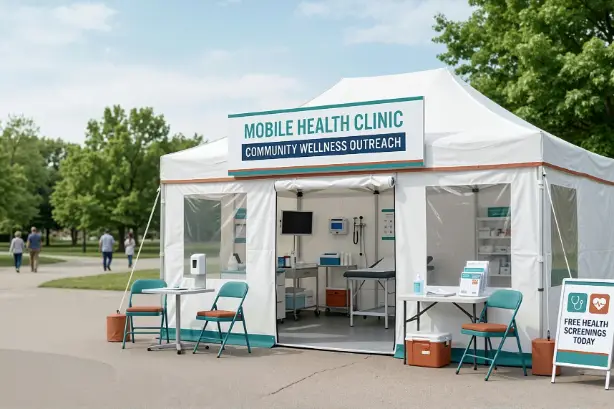
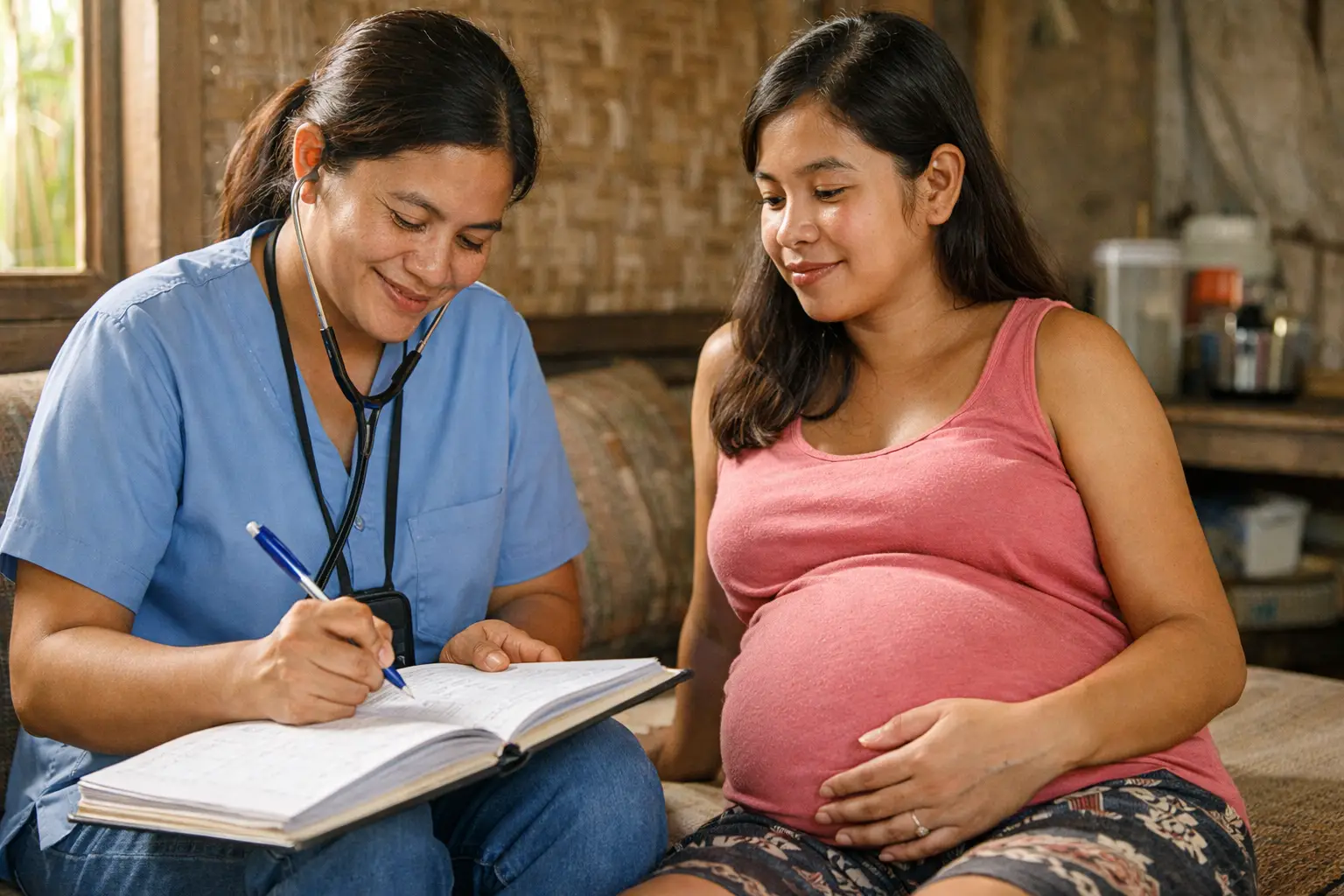
Every year, approximately 2,400 women die in the Philippines from preventable causes related to pregnancy and childbirth. The national maternal mortality ratio stood at 119 deaths per 100,000 live births in 2024, still far above the Sustainable Development Goal target of fewer than 70 by 2030. The Philippines is not failing for lack of laws, protocols, or clinical knowledge. It is failing, in part, because the earliest and most critical point of intervention, the community, remains the weakest link in the maternal health chain. Programs that invest in community-based maternal monitoring are investing in exactly where the gap is largest. This article examines what an effective community-based maternal monitoring system looks like in the Philippine context, what the evidence says about the components that work, and how one modeling project in Samar illustrates what that model can look like in practice.
The majority of maternal deaths in the Philippines are caused by hemorrhage, hypertensive disorders, and sepsis. All three of these conditions are amenable to early detection and timely referral. The clinical interventions that can prevent death from each of these causes are well established, widely taught, and available in most district and provincial hospitals. The problem is not treatment. It is detection and timing. Women die because danger signs are not recognized early enough, because referral is delayed, or because the receiving facility is unprepared for an incoming case.
This is a community surveillance problem. The window between a danger sign appearing and a complication becoming life-threatening is often measured in hours. In rural settings where roads become impassable during typhoon season and a pregnant woman may live an hour or more from the nearest BEmONC facility, that window is even narrower. The only health worker who can close this gap in time is the one closest to the woman, the Barangay Health Worker conducting a home visit.
BHWs are officially recognized under Republic Act No. 7883, the Barangay Health Workers Benefits and Incentives Act, as the frontline of primary health service delivery in the Philippines. Research consistently shows that BHWs are among the most trusted health workers in their communities, a 2024 needs assessment in Quezon Province found that 90.8 percent of community members had sought health services from their BHW in the preceding six months, and 79.0 percent expressed high trust in them. The challenge is not community acceptance. It is the quality, consistency, and supervisory support of what BHWs are asked to do.
https://newsinfo.inquirer.net/2205034/ph-maternal-mortality-declines-but-still-short-of-sdg-target-2
Research on community-based maternal health interventions across the Philippines and comparable low- and middle-income country settings points to a consistent set of components that distinguish systems that work from those that do not. These are not technological features, they are structural design principles.
Monitoring systems fail when they only capture pregnancies that self-present to health facilities. In communities where women delay or avoid facility visits for economic, cultural, or geographic reasons, relying on facility registration means a substantial share of high-risk pregnancies are never identified until a complication forces the issue. Effective community monitoring begins with active, household-level pregnancy identification by BHWs, through regular house-to-house visits, coordination with barangay officials and community leaders, cross-checking with RHU records, and participation in community gatherings where women can report pregnancies confidentially.
The DOH's Bisita Buntis (Visit Pregnant Women) strategy, documented by WHO Philippines, established this principle in national policy: BHWs are expected to actively seek out pregnant women in their catchment area rather than wait for women to come to them. Programs that translate this principle into a structured, monitored process, with logbooks, defined visit frequencies, and accountability mechanisms, see substantially better identification rates than those that leave it to informal practice.
Identifying a pregnancy is only useful if the BHW can assess whether it requires heightened monitoring or immediate referral. Risk screening tools for community use must meet two criteria simultaneously: they must be clinically valid (covering the risk factors and danger signs that predict adverse outcomes) and operationally usable by a BHW with basic health training and no clinical equipment beyond a blood pressure monitor.
The evidence supports a tiered classification approach rather than a binary high-risk or low-risk distinction. A three-tier system, covering normal pregnancies requiring standard follow-up, moderate-risk pregnancies requiring closer monitoring, and high-risk pregnancies requiring immediate referral, allows BHWs to calibrate their response without reducing every classification decision to a single threshold. This approach also manages resource demands more effectively. A system that refers all Yellow-level pregnancies immediately to hospitals would overwhelm facilities and erode BHW credibility. A system that keeps Yellow cases in the community under close monitoring, while referring Red cases immediately, distributes the care load appropriately across facility levels.
Risk classification is only as valuable as the referral system it connects to. The most common failure point in community-based maternal monitoring programs is the referral loop. BHWs identify danger signs and alert the RHU. The RHU sends the patient to the hospital. The hospital manages the patient and discharges her. But the information about what happened, the diagnosis, the treatment, the follow-up requirements, never makes it back to the BHW. The mother returns to her barangay with no one in the community health system aware of her condition or responsible for her follow-up care.
Effective systems close this loop explicitly. They require a counter-referral response from the receiving facility. They assign follow-up responsibilities to the BHW after discharge. And they document every step of the referral process in a way that is visible to all levels of the health system, from the BHW logbook to the RHU record to the provincial dashboard.
Traditional community health monitoring systems in the Philippines have operated on weekly or monthly paper-based reports that are submitted upward through the health system and summarized at the municipal or provincial level, often weeks after the events they describe. This reporting lag means that supervisors cannot act on information in real time. A provincial health officer reviewing a monthly summary cannot identify the barangay with six unmonitored high-risk pregnancies until it is too late to intervene proactively.
Digital tools that provide real-time or near-real-time data visibility fundamentally change the supervisory function. A dashboard showing current risk distribution by barangay, active overdue pregnancies, and referral completion rates transforms supervision from a retrospective audit into a prospective management tool. Research from the 2024 BHW Connect launch by DOH Eastern Visayas specifically cited the absence of real-time visibility as a key weakness in the existing National Barangay Health Workers Registry System and positioned digital connectivity as the solution.
Training programs that prepare BHWs in isolation from the midwives and nurses they are supposed to coordinate with produce competent individuals and dysfunctional teams. The referral process involves at least three actors at each transition point: the BHW, the RHU midwife, and the receiving facility. If these actors have been trained separately, with different terminology, different forms, and different expectations of each other's role, the referral process breaks down at every handoff.
A systems approach to training, bringing all cadres together in a shared learning event that covers each actor's role and the coordination protocols between them, is consistently associated with better referral outcomes. Research on community health worker programs in Eastern Visayas, including the KOICA-funded Maternal, Newborn, and Child Health project (2021-2025), found that investing in multi-level training coordination was one of the strongest predictors of program implementation quality.
https://www.frontiersin.org/journals/public-health/articles/10.3389/fpubh.2025.1594388/full
Digital health tools have attracted significant investment in Philippine maternal health programming in recent years. The DOH's eHealth Strategic Framework and Plan, the UHC Act's mandate for interoperable electronic medical records by 2028, and the 2024 BHW Connect initiative all reflect a national commitment to digitizing community health work. The evidence on digital tools for BHWs is cautiously optimistic but points to important conditions for success.
A 2024 mixed-methods assessment in Quezon Province, conducted by CARE as part of the HEAL Hub project, found that only 32.2 percent of surveyed BHWs met basic computer literacy standards, despite moderate mobile device and internet access. However, among BHWs who did meet literacy standards, digital tools were associated with 46 percent faster reporting and 59 percent more accurate data collection. As of 2024, only 6 percent of Philippine health facilities had internet connectivity. These findings point to a consistent pattern: digital tools work well when they meet users where they are, and poorly when they assume capabilities or infrastructure that does not yet exist.
Digital tools are a layer on top of a functional system, they are not a substitute for one. A well-designed paper-based monitoring system with good supervision produces better outcomes than a sophisticated digital system with poor training and no follow-up. Programs should invest in the structural components first, pregnancy identification, risk screening, referral protocols, multi-cadre coordination, and integrate digital tools in ways that extend rather than replace those structural foundations.
The most effective digital implementations for community-level maternal monitoring in the Philippines share three design characteristics. First, they use tools that BHWs already have access to and are familiar with, typically smartphones and free Google tools rather than specialized applications requiring installation and maintenance. Second, they layer the digital component on top of a paper-based official record rather than eliminating paper entirely, preserving data continuity in low-connectivity situations. Third, they are designed primarily to serve the supervisor, not the encoder, the primary output is a dashboard that enables the RHU and PHO to act on data, not just a form that captures it.
The Samar Maternal Risk Tracking and Monitoring System, known as SMART Moms, is a modeling project implemented by the Philippine Society for Responsible Parenthood, Inc. (PSRP) with funding from UNICEF Philippines. Rolled out across five municipalities in Samar beginning in November 2025, SMART Moms was designed not as a permanent program but as a proof-of-concept demonstration, showing that all the components described above can be integrated into a working, field-tested system in a rural Philippine setting.
The pilot geography is deliberate. Samar has persistently high rates of adolescent pregnancy, geographic isolation that complicates access to higher-level facilities, and a predominantly rural population that depends heavily on BHWs as the primary point of health contact. It is one of the most difficult settings in which to build a community monitoring system, and therefore one of the most instructive places to test whether such a system can work.
Implementing Organization: Philippine Society for Responsible Parenthood, Inc. (PSRP)
Funding Agency: UNICEF Philippines
Coverage: Five municipalities in Samar Province, Eastern Visayas
Status: Modeling project, initiated November 2025
Full name: Samar Maternal Risk Tracking and Monitoring System (SMaRT MomS)
SMART Moms operationalizes the active pregnancy identification principle through a structured home-visit protocol in which BHWs are expected to visit every household in their catchment area every two to four weeks. They identify pregnancies through direct inquiry, observation, and coordination with barangay officials, 4Ps leaders, and traditional birth attendants. Each identified pregnancy is recorded in the official Barangay Pregnancy Monitoring Logbook using a standardized Patient ID format (Municipality–Barangay–Year–Sequence) that enables traceability across all levels of the system. BHWs are also required to cross-check their logbook against RHU records regularly to ensure no pregnancy is missed on either side.
SMART Moms uses a structured three-tier color classification system that operationalizes the risk-screening principles described above.
Age 20 to 34, BP below 140/90, no past complications, normal nutrition, regular fetal movement. Monthly BHW follow-up, facility-based delivery planning.
Adolescent or advanced maternal age, high parity, short birth interval, history of complications, BP 140/90 to 159/109. Weekly BHW follow-up, midwife informed, immediate referral if Red signs appear.
Severe headache, blurred vision, BP 160/110 or higher, heavy bleeding, no fetal movement for 24 hours, leaking discharge. Immediate referral, referral slip completed, transport arranged now.
The Google Sheet that receives BHW submissions automatically recalculates the final color code based on entered risk factors, correcting manual classification errors and ensuring that what appears on the supervisory dashboard always reflects the true clinical picture. This automated validation layer addresses one of the most common data quality failures in paper-based monitoring systems.
SMART Moms formalizes the counter-referral loop through a single combined Maternity Referral and Counter-Referral Form. The referring BHW fills the patient details and reason for referral. The RHU midwife completes the obstetric history and coordinates with the receiving facility by phone or messaging before transport. The receiving facility manages the patient and completes the counter-referral section, which is returned to the RHU by photo, scan, or physical copy. The BHW records the outcome and continues community follow-up based on the facility's instructions. No case is considered closed until the counter-referral is received.
SMART Moms connects three free Google tools into a digital data flow: a Google Form for BHW data entry in the field, a shared Google Sheet with automatic validation for RHU-level review and updating, and a Looker Studio dashboard accessible to both the municipal health office and the provincial health office for real-time oversight. The dashboard shows total active pregnancies, risk distribution by barangay, pregnancies due within the next seven and thirty days, ANC coverage, laboratory results, delivery outcomes, and postnatal care completion. Both the municipal and provincial levels monitor this dashboard, enabling supervisory action before crises develop rather than in response to them.
The SMART Moms training guide, developed collaboratively by PSRP and UNICEF Philippines, is structured as a single one-day blended workshop that brings BHWs, midwives, nurses, and municipal health officers together into one learning event. All cadres learn the same risk classification criteria, the same referral process, and the same digital tools in a shared setting that builds the team coordination the system depends on. Gender equality and social inclusion are integrated throughout rather than treated as a separate module.
SMART Moms has demonstrated that the concept works. The coordination architecture is sound, the tools are feasible in resource-limited rural settings, and BHWs and health facility staff can be trained together to operate the system as designed. What the project has not secured is policy adoption. Without a DOH administrative order, LGU ordinance, or institutional anchor that embeds the system into routine government health operations, the monitoring infrastructure SMART Moms built is unlikely to outlast the project funding that created it. This is a familiar outcome for modeling projects in Philippine public health: the concept is proven, but the transition from donor-funded demonstration to government-sustained program requires policy traction that the project itself was not designed to generate. The evidence SMART Moms has produced belongs in that policy conversation, whether or not the project continues.
Community-based maternal monitoring is not a technology problem. The tools available for identifying pregnancies, screening risk, and tracking referrals are well within the reach of any LGU or implementing organization working in the Philippine health system. The gap is in the programmatic design decisions that determine whether those tools are used consistently, correctly, and in a way that is visible to supervisors who can act on them.
| Design Principle | Common Program Failure Mode | What Effective Programs Do Instead |
|---|---|---|
| Universal pregnancy identification | Rely on facility self-registration, missing women who do not seek care | Mandate structured household visits by BHWs with accountability tracking and cross-checking with RHU records |
| Structured risk screening | Binary high-risk or low-risk checklist with no intermediate category | Three-tier classification with clear action protocols for each tier and automated validation where digital tools are used |
| Referral and counter-referral | Referral documented, counter-referral not required or not tracked | Combined referral form with counter-referral section, explicit assignment of follow-up responsibility after discharge |
| Data visibility | Monthly paper summaries reviewed retrospectively by supervisors | Real-time or near-real-time dashboard accessible to RHU and PHO, designed to drive action not just record outcomes |
| Training design | BHWs trained separately from midwives and nurses | Multi-cadre training bringing all system actors together with shared terminology, forms, and role clarity |
| Digital tool selection | Specialized apps requiring installation, training, and ongoing IT support | Free tools already familiar to users (Google Form, Google Sheet, Looker Studio) layered on top of paper records, not replacing them |
Programs that align their design to these principles, as SMART Moms demonstrated in Samar, are more likely to produce the sustained behavioral change at the community level that drives down maternal mortality. But design quality alone does not sustain a program. The technology is secondary. The coordination architecture is primary. And the policy environment that decides whether a proven model becomes routine government practice is the variable that ultimately determines whether the investment in community maternal monitoring saves lives beyond the life of the project that funded it.
Designing a Maternal Health Program in the Philippines?
SPHERES, Inc. provides technical assistance in maternal health program design, community monitoring system development, BHW capacity building, and M&E framework design across the Philippines.
Get in Touch