The Philippines carries two of the most severe communicable disease burdens in the Asia Pacific region simultaneously. It ranks third in the world for tuberculosis incidence and has the fastest-growing HIV epidemic in Asia Pacific. These are not parallel problems that happen to coexist in the same country. They are intertwined crises that feed each other, share vulnerable populations, compete for the same programmatic resources, and together expose the deepest structural weaknesses in the Philippine health system. For organizations working in health programming in the Philippines, understanding the current state of both epidemics is not background reading — it is essential operational knowledge.
The WHO Global Tuberculosis Report 2025 places the Philippines third globally among countries with the highest TB burden, accounting for 6.8 percent of all TB cases in the world. The incidence rate in 2024 was 500 new cases per 100,000 population — a figure that is more than six times the regional average for Southeast Asia. In absolute terms, 739,000 Filipinos were diagnosed with TB in 2023, and approximately 37,000 died. The DOH reported nearly 200,000 new TB cases in the first half of 2025 alone, indicating the burden has not eased.
What makes the Philippine TB situation particularly alarming is not just the scale but the trajectory. The WHO's End TB Strategy set a milestone of a 50 percent reduction in TB incidence by 2025 compared to 2015 levels. The Philippines has recorded a 5 percent increase over the same period — one of only 37 countries globally where TB incidence rose rather than fell. Between 2015 and 2022, TB-related deaths in the Philippines increased by 46 percent, a figure the WHO attributes in part to COVID-related disruptions to TB diagnosis and treatment in 2020 and 2021 but which also reflects structural failures in the national TB response that predate the pandemic.
Men aged 15 and above account for 61 percent of TB cases in the Philippines, reflecting the working-age concentration of the disease. About 42 percent of Filipino households affected by TB experience significant economic hardship, and nearly half were living in poverty before their diagnosis despite the National TB Programme's provision of free treatment services. TB in the Philippines is as much a poverty indicator as it is a health one.
The Philippines is also among the top five countries globally for multidrug-resistant tuberculosis (MDR-TB), accounting for 7.2 percent of global MDR-TB cases. MDR-TB is caused by strains of Mycobacterium tuberculosis that do not respond to isoniazid and rifampicin, the two most effective first-line drugs. Treatment historically required up to two years of toxic second-line drugs with severe side effects and success rates well below those of drug-sensitive TB. Treatment success rates for standard TB in the Philippines remain below 60 percent — a figure that reflects both treatment interruption and diagnostic gaps.
WHO now recommends a new all-oral six-month regimen known as BPaLM as the treatment of choice for eligible MDR-TB patients. The DOH confirmed in November 2025 that this regimen is being introduced in the Philippines, cutting treatment time from two years to six months. Globally, approximately 34,000 people with MDR-TB started treatment on BPaLM and related short regimens in 2024, a dramatic increase from 5,653 in 2023. Expanding access to this regimen in the Philippines is one of the most immediate programmatic opportunities in TB control.
The Philippines has the fastest-growing HIV epidemic in the Asia Pacific region. This is not a recent designation — the country was already described in these terms in 2016 — but the pace has not slowed. It has accelerated. New HIV infections rose by 550 percent from 4,400 cases in 2010 to 29,600 in 2024, according to WHO estimates. In June 2025, UNAIDS and WHO issued a joint statement calling for urgent and immediate action, supporting the DOH's request for a presidential executive order declaring HIV a high-priority public health concern requiring nationwide response.
As of March 2025, 139,610 Filipinos had been diagnosed and were known to be living with HIV. Of these, only 92,712 — 66 percent of those diagnosed — were receiving life-saving antiretroviral therapy (ART). Of those on ART, only 41,786 had been tested for HIV viral load, and 36,630 had achieved viral suppression. This means the Philippines is nowhere close to the UNAIDS 95-95-95 targets — 95 percent of people with HIV knowing their status, 95 percent of those on treatment, and 95 percent with viral load suppressed — which underpin the global strategy to end AIDS as a public health threat by 2030.
The epidemic's demographic profile is stark. Males account for 94 percent of all reported cases since 1984. The DOH has reported that approximately 70 percent of all HIV cases involve males who have sex with males, a population that faces compounding barriers of stigma, discrimination, and limited access to healthcare. Over 75 percent of this population has never been tested for HIV. The first quarter of 2025 recorded 5,101 new HIV cases — a 50 percent increase compared to the same period in 2024. Monthly detections in the third quarter of 2025 reached 1,731, 17 percent higher than the same period the previous year.
Projections indicate that without decisive intervention, the number of Filipinos living with HIV could reach 500,000 by 2030. Cases among those under 15 years old have risen by 129 percent in the past five years. Cases among those aged 15 to 24 have increased by 106 percent in the same period. The epidemic is getting younger faster than the health system is responding.
HIV in the Philippines is not evenly distributed. From July to September 2025, 61 percent of new diagnoses came from Metro Manila and four surrounding regions: Calabarzon, Central Luzon, Central Visayas, and Davao. Metro Manila consistently accounts for the largest share of new cases, reflecting both the concentration of the at-risk population and the relative availability of testing services in the capital region. But the rising share of cases from Central Visayas and Davao signals that the epidemic is no longer principally a National Capital Region problem — it is expanding into regional centers that have weaker treatment infrastructure and fewer community-based services.
TB is the leading cause of death among people living with HIV in the Philippines. This makes the convergence of the country's two most critical communicable disease burdens particularly dangerous. HIV weakens the immune system in ways that make individuals dramatically more susceptible to developing active TB disease. A person living with HIV is 18 times more likely to develop active TB than someone who is HIV-negative. In a country with one of the world's highest TB incidence rates and one of the fastest-growing HIV epidemics, this intersection creates a compound vulnerability that standard single-disease programming cannot adequately address.
The WHO has recommended collaborative TB/HIV activities since 2004, including bidirectional screening — testing TB patients for HIV and testing HIV patients for TB — as a standard of care. The Philippines is listed by both WHO and CDC as one of the countries with the highest burden of all three conditions simultaneously: TB, HIV-associated TB, and MDR-TB. The Global Fund Cycle 7 grant for 2024 to 2026, valued at $26.8 million, specifically covers all three of these conditions in its Philippine program design, reflecting the integrated programmatic approach that the epidemiological reality demands.
TB is the definitive disease of deprivation. Addressing tuberculosis in the Philippines means improving access to nutrition, housing, education and affordable healthcare — factors that directly influence disease outcomes. — WHO Director-General Dr. Tedros Adhanom Ghebreyesus
Both epidemics have dedicated national policy frameworks, and both have seen significant recent updates that shape how programs are designed and funded.
The Philippine Strategic TB Elimination Plan Phase 2 (PhilSTEP2) for 2025 to 2030 was approved in late 2025 as the primary strategic framework for TB control. Under PhilSTEP2, the DOH aims to screen 12 million Filipinos nationwide by 2026. Alongside it, the Philippine Acceleration Action Plan for Tuberculosis (PAAP-TB 2023-2035) provides the multisectoral framework for joint action among government agencies, civil society, and private partners toward TB elimination by 2035. Both documents align with the WHO End TB Strategy targets of a 95 percent reduction in TB mortality and a 90 percent decline in TB incidence by 2035 compared to 2015.
The DOH National Expenditure Program for 2026 proposes a TB budget of PHP 4.2 billion — nearly double the PHP 2.6 billion allocated in 2025. This budgetary commitment reflects political recognition of the crisis. The DOH and WHO announced in November 2025 a joint target of screening 12 million Filipinos for TB by 2026, using AI-powered portable chest X-ray units and WHO-recommended nucleic acid amplification tests. The DOH also reported a 50 percent increase in enrollment for Tuberculosis Preventive Treatment in 2024, supported by shorter regimens and expanded contact investigation.
The Philippine HIV and AIDS Policy Act of 2018 (Republic Act 11166) updated the country's legal framework for HIV response, strengthening provisions on confidentiality, informed consent, and access to treatment. It replaced the original AIDS Prevention and Control Act of 1998. Despite the updated law, program implementation has not kept pace with the epidemic's growth. In June 2025, UNAIDS and WHO jointly called for the Philippine president to sign an executive order declaring HIV an urgent public health concern requiring nationwide response — a declaration that would mobilize all government agencies, not just the DOH, in a coordinated national effort. The executive order had not been signed as of the third quarter of 2025.
| Framework | Disease | Period | Key Target |
|---|---|---|---|
| PhilSTEP2 (Philippine Strategic TB Elimination Plan Phase 2) | TB | 2025-2030 | Screen 12 million Filipinos by 2026; align with WHO End TB Strategy milestones |
| PAAP-TB (Philippine Acceleration Action Plan for TB) | TB | 2023-2035 | Multisectoral framework toward TB elimination; 95% reduction in mortality by 2035 |
| Republic Act 11166 (Philippine HIV and AIDS Policy Act) | HIV | 2018 onwards | Strengthens confidentiality, informed consent, access to treatment |
| UNAIDS 95-95-95 Targets | HIV | By 2030 | 95% diagnosed, 95% on treatment, 95% virally suppressed — Philippines far from achieving all three |
| National TB Program (NTP) | TB | Ongoing | Free treatment for all TB cases; National TB Reference Laboratory; reporting and surveillance |
| Global Fund Cycle 7 Grant | TB, HIV, Malaria | 2024-2026 | $26.8 million covering HIV, TB, malaria — addresses all three high-burden conditions simultaneously |
The exit of USAID from the Philippines in 2025 created a significant gap in both TB and HIV programming. USAID had invested over PHP 14.6 billion in Philippine health programs between 2018 and 2023, including landmark commitments in TB case finding. In March 2024 — before the cessation of operations — DOH and USAID announced a joint PHP 1.15 billion commitment to screen at least one million Filipinos for TB and enhance case finding through the SWIF-TB initiative, one of only two countries globally selected for this program alongside Ethiopia. That commitment ended with the USAID mission's closure.
However, the Philippines secured a US$250 million health aid package in 2025 following the broader U.S. foreign assistance review, with US$21 million specifically earmarked for TB programs. The source and implementing structure of this funding differs from prior USAID programming and its long-term continuity is less certain.
The Global Fund remains the most significant external financier for both TB and HIV in the Philippines. The Cycle 7 grant of $26.8 million for 2024 to 2026 is implemented through three principal recipients: the DOH for the HIV grant, the Philippine Business for Social Progress for the TB grant, and the Pilipinas Shell Foundation for the malaria grant. The rapid HIV diagnostic algorithm deployed in 68 healthcare facilities under this grant has significantly reduced turnaround time for HIV confirmatory testing.
The statistics on TB and HIV in the Philippines describe outcomes. They do not fully explain causes. Several structural factors consistently appear in the literature as the primary drivers of the persistence and growth of both epidemics.
For HIV, stigma is arguably the single most significant barrier to testing, treatment entry, and treatment retention. The DOH has reported that over 75 percent of males who have sex with males — the group most affected by the epidemic — have never been tested for HIV. The primary reason is not lack of access to testing facilities. It is fear of discrimination from healthcare workers, family members, and employers. A person who fears losing their job or their family's support if their status becomes known will delay testing until they are already severely ill. The 895 cases diagnosed at an advanced stage of infection in the third quarter of 2025 alone are the visible cost of this delay.
For TB, stigma operates differently but with similar results. A person with persistent cough who fears being labeled as having TB — with its associations with poverty, overcrowding, and social marginalization — may delay seeking care until the disease is far advanced and has already been transmitted to household contacts.
TB treatment success rates in the Philippines remain below 60 percent. This is not primarily a medicine supply problem — the National TB Program provides free treatment. It is a treatment support problem. TB treatment requires at minimum six months of daily medication for drug-sensitive cases. Side effects, work obligations, travel distance to health facilities, and the perception that symptoms have resolved before the treatment course is complete all contribute to treatment interruption. Incomplete TB treatment is the primary driver of MDR-TB development.
For HIV, the treatment cascade data tell the same story. Of an estimated 252,800 Filipinos living with HIV in 2025, only 55 percent have been diagnosed. Of those diagnosed, 66 percent are on treatment. Of those on treatment, only 40 percent have achieved viral suppression. At each stage of the cascade, more than a third of people are lost. The result is continued transmission from people who do not know their status and continued disease progression in people who are diagnosed but not retained in care.
Both TB and HIV services are concentrated in urban centers and major provincial capitals. Rural health units in geographically isolated and disadvantaged areas frequently lack the diagnostic capacity for TB — GeneXpert machines for nucleic acid amplification testing, chest X-ray equipment, and trained laboratory personnel. HIV testing and treatment services are even more concentrated. In many rural municipalities, a person who tests positive for HIV must travel to the regional referral center to access antiretroviral therapy, creating a logistical barrier that translates directly into treatment interruption and loss to follow-up.
Both epidemics disproportionately affect populations living in poverty, in overcrowded housing, with limited nutrition and poor ventilation. TB bacteria thrive in exactly these conditions. HIV risk is elevated among populations with limited economic power to negotiate safer sexual practices and limited access to preventive services. The Universal Health Care Act has the structural ambition to address these inequities — expanding primary care coverage, strengthening community health teams, and providing financial risk protection. But implementation remains uneven, and the most marginalized populations are still the furthest from the expanding coverage of the health system.
For organizations working in health consulting, technical assistance, and program implementation in the Philippines, the TB and HIV burden data points to specific programmatic directions that are both evidence-based and currently underfunded.
Given that TB is the leading cause of death among people living with HIV, programs that address one without systematically screening for the other are operating below the evidence standard. Bidirectional TB/HIV screening — offering TB testing to all people living with HIV and HIV testing to all TB patients — is WHO-recommended and should be considered a minimum standard for any primary care strengthening or communicable disease program in the Philippines. Programs that maintain parallel, siloed service delivery for TB and HIV in the same facilities are missing the most important clinical intervention available to them.
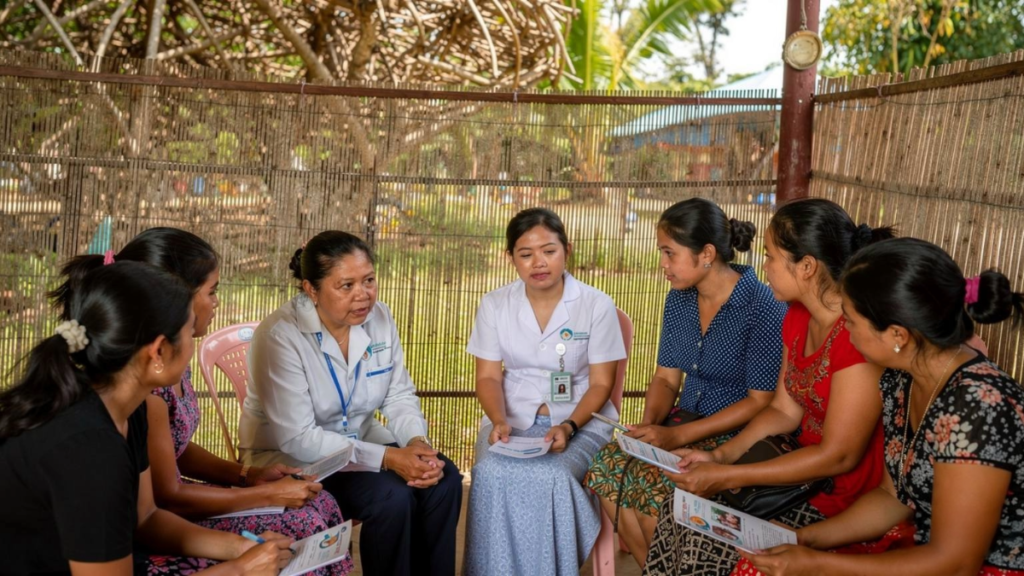
The evidence on treatment completion for TB and on testing uptake for HIV both point to the same conclusion: facility-based services alone are insufficient for populations that are stigmatized, geographically remote, or economically constrained. Community health workers who can conduct contact investigation for TB, support treatment adherence, and facilitate HIV testing within their communities have consistently demonstrated better outcomes than facility-only approaches. Programs that invest in community health worker capacity for both TB and HIV are addressing the structural barriers rather than just the clinical ones.
The introduction of the BPaLM six-month regimen for MDR-TB in the Philippines represents one of the most significant opportunities in TB control in a generation. But shorter, more effective treatment is only useful if patients reach diagnosis and treatment entry. Programs that invest in MDR-TB case finding, contact tracing, and diagnostic scale-up now — before the BPaLM rollout is complete — will position the Philippines to realize the regimen's full potential.
With 33 percent of new HIV infections in 2025 occurring among youth aged 15 to 24, and cases among those under 15 rising by 129 percent in five years, the epidemic's demographic center of gravity is shifting younger faster than programming is adapting. Adolescent- and youth-friendly HIV services, peer-led testing outreach, school-based sexual health education, and digital engagement strategies for young people are not peripheral components of an HIV program in the Philippines. They are increasingly its core.