The Philippines has been one of the most active recipients of international health development assistance in Southeast Asia. For decades, major global health institutions, bilateral development agencies, and multilateral organizations have channeled billions of pesos into programs addressing tuberculosis, HIV, maternal and child health, reproductive health, immunization, and health systems strengthening. The landscape of that assistance, however, has shifted significantly. As of July 1, 2025, the United States Agency for International Development (USAID) officially ceased implementing foreign assistance globally, including the termination of all awards managed by the USAID Philippines mission that began between January 20 and March 25, 2025. This marks a major transition for Philippine public health programming, and it elevates the importance of understanding which funders remain active and how organizations can engage with them.
A Shifting Landscape of International Health Funding
International health assistance in the Philippines flows primarily through two channels: bilateral development agencies that work government-to-government or through implementing partners, and multilateral organizations such as United Nations agencies and development banks that work directly with the Department of Health (DOH) and local government units.
The Philippine government has consistently welcomed this international engagement, particularly as the country works toward the goals of its landmark Universal Health Care Act, signed into law on February 20, 2019 as Republic Act No. 11223. The law aims to ensure equitable access to quality health services for all Filipinos with financial risk protection, and it has become the central policy framework around which most current international health projects are aligned.
A significant change in the international assistance landscape occurred in early 2025. Following Executive Order 14169 signed by U.S. President Donald Trump on January 20, 2025, all U.S. foreign assistance was paused and subsequently reviewed. USAID officially ceased implementing foreign assistance on July 1, 2025. The USAID Philippines mission terminated 30 awards between January and March 2025. While USAID's historical contribution to Philippine health was substantial — over Philippine Peso 14.6 billion invested between 2018 and 2023 — the agency is no longer an active funder. Organizations and health programs previously dependent on USAID funding have had to adapt, and the gap has opened opportunities for other bilateral donors to expand their engagement.
$450M
ADB loan approved December 2023 for the Build Universal Health Care Program
PHP 490M
approx.
KOICA joint programme funding for adolescent health in Eastern Visayas, 2022 to 2026
PHP 145.5M
Canada-UNICEF partnership for immunization integration, signed February 2024
Despite the exit of USAID, the overall pipeline of international health investment in the Philippines remains robust. The Asian Development Bank, World Bank, KOICA, JICA, Canada, and UN agencies continue to channel significant resources into health systems, universal health care, maternal and child health, reproductive health, and immunization.
Key Active Funding Institutions and Their Roles
Each international health funding institution operates with its own mandate, funding mechanisms, and partnership modalities. Knowing these distinctions is critical for health organizations planning to engage with these institutions as implementing partners, technical advisors, or subcontractors.
KOICA (Korea International Cooperation Agency)
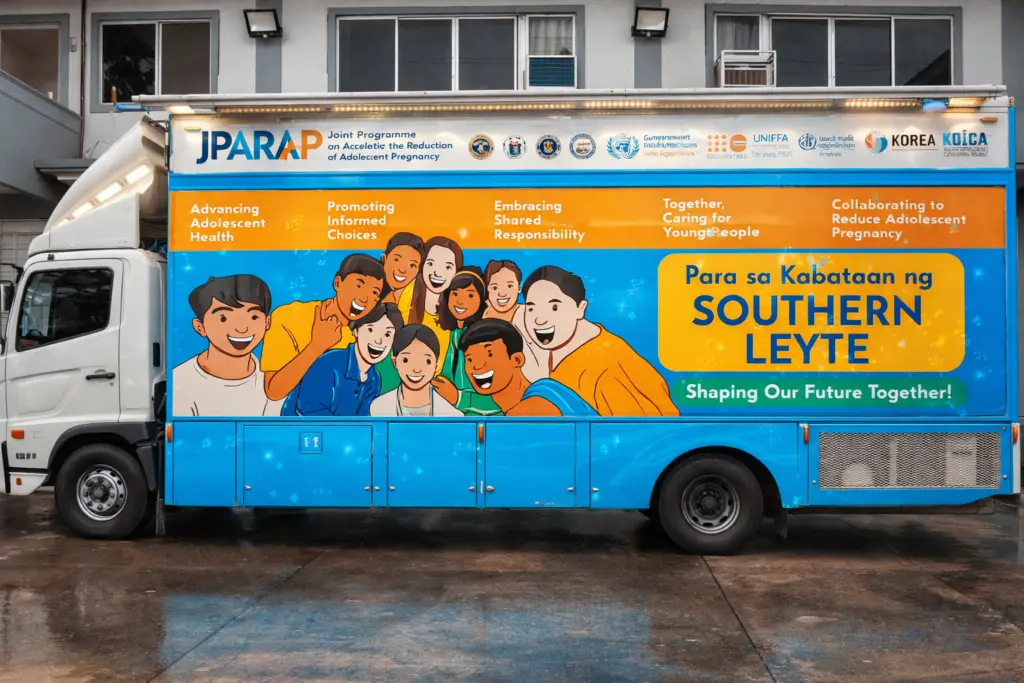
One of the most active bilateral health funders in the Philippines today. KOICA's budget for the Philippines increased by 48 percent in 2024. Active programs include the PHP 490 million adolescent pregnancy reduction joint programme in Eastern Visayas with UNFPA, UNICEF, and WHO; the BARMM health partnership with JICA; the Subnational Initiative Phase 2 with WHO and DOH covering Caraga, Davao, and Western Visayas; and mobile health clinics for adolescents in Samar and Southern Leyte launched in May 2024.
Active
JICA (Japan International Cooperation Agency)
Japan's primary development cooperation agency provides both grant and loan-based financing. In the health sector, JICA focuses on maternal and newborn health, nutrition, community health services, PhilHealth enrollment, and facility-based deliveries. JICA is a key partner in the BARMM health initiative alongside KOICA. Japan also provided a mobile X-ray machine for remote TB screening of Aeta communities in Olongapo City, Zambales, and funded digital health tools including DigiVacc through UNICEF.
Active
UNICEF (United Nations Children's Fund)
Focuses on child and maternal health, immunization, nutrition, water, sanitation, and hygiene. UNICEF is funded entirely by voluntary contributions and partners with DOH on the National Immunization Program, emergency health response, and adolescent health. In February 2024, UNICEF and the Government of Canada signed a PHP 145.5 million partnership to integrate COVID-19 vaccination with routine immunization services.
Active
UNFPA (United Nations Population Fund)
Mandated to advance sexual and reproductive health and rights. UNFPA's 9th Country Programme in the Philippines runs from 2024 to 2028 and focuses on ending preventable maternal deaths, reducing adolescent pregnancy, addressing unmet need for family planning, and ending gender-based violence. UNFPA is the lead agency for the KOICA-funded adolescent pregnancy reduction programme in Eastern Visayas.
Active
WHO (World Health Organization)
Provides normative guidance, technical support, and surveillance capacity. WHO co-led the Philippines' second Joint External Evaluation in November 2024 and is a partner in the KOICA-funded Subnational Initiative Phase 2, which strengthens Health Care Provider Networks across Caraga, Davao, and Western Visayas. WHO also supports health security, immunization, and universal health coverage policy development.
Active
ADB (Asian Development Bank)
Provides policy-based loans tied to health sector reforms. ADB approved a $450 million loan in December 2023 under its Build Universal Health Care Program Subprogram 2 to support sustainable financing, integrated service delivery, and health information systems under RA 11223. ADB's engagement with the Philippine health sector is long-term and deeply embedded in UHC implementation.
Active
Government of Canada
Canada's global health engagement in the Philippines is channeled primarily through partnerships with UN agencies. In February 2024, the Philippine government received PHP 145.5 million from Canada through a strategic partnership with UNICEF to integrate COVID-19 vaccination, routine immunization, and proven approaches to strengthen the National Immunization Program.
Active
World Bank
Supports health financing reforms, digital health systems, and primary care strengthening. The World Bank's current health engagement is closely tied to UHC Act implementation and building interoperable digital health infrastructure. Its proposed Philippines Digital Health and Primary Care Project directly supports RA 11223 and the Philippine Development Plan 2023 to 2028.
Active
The Global Fund to Fight AIDS, Tuberculosis and Malaria also remains an active funder, with a $26.8 million grant secured for 2024 to 2026 under Cycle 7 covering HIV, TB, and malaria. The Australian Government through its Department of Foreign Affairs and Trade continues to co-fund immunization and health security initiatives alongside UN agencies.
USAID, which invested over PHP 14.6 billion in Philippine health programs between 2018 and 2023, officially ceased implementing foreign assistance on July 1, 2025. Its historical programs in TB, HIV, family planning, and maternal health produced important results and are referenced in this article as completed programs. USAID is no longer an active bilateral health funder in the Philippines.
Common Objectives of International Health Projects
While the specific focus of any project varies by funder, geography, and health context, internationally funded health projects in the Philippines tend to cluster around several recurring programmatic objectives.
Health Systems Strengthening
Most international health funders place health systems strengthening at the center of their programming philosophy, recognizing that sustainable health outcomes require functional institutions. This includes improving governance and accountability in the DOH and local health offices, strengthening referral networks between primary, secondary, and tertiary facilities, building the capacity of health workers through training and mentoring, and improving health information systems for real-time data collection and reporting. KOICA's Subnational Initiative Phase 2, concluded in May 2025, exemplifies this approach through its work strengthening Health Care Provider Networks across three regions.
Communicable Disease Control
Tuberculosis remains a central focus in the Philippines, which carries one of the highest TB burdens in the world. HIV has also emerged as a critical priority, with the country recording one of the fastest-growing HIV epidemics in Asia Pacific. International projects in this space fund case finding, diagnosis, treatment, contact tracing, community-based care, and integration of TB and HIV services. The Global Fund Cycle 7 grant supports this work through 2026.
Maternal, Newborn, and Child Health
Reducing maternal and neonatal mortality, improving skilled birth attendance, and ensuring quality postnatal care remain core objectives. JICA's work in BARMM specifically targets maternal and newborn health and nutrition, promotes PhilHealth enrollment for facility-based deliveries, and integrates gender mainstreaming into health service delivery.
Family Planning and Reproductive Health
Unmet need for family planning in the Philippines, particularly in regions like Eastern Visayas and BARMM, remains a significant challenge. UNFPA's 9th Country Programme addresses this through a comprehensive strategy that integrates reducing adolescent pregnancies, addressing unmet contraceptive need, and ending gender-based violence. KOICA has jointly called with UN agencies for the passage of an adolescent pregnancy prevention law in the Philippines.
Immunization
Sustaining and expanding vaccination coverage is a persistent focus. The number of unvaccinated or zero-dose children in the Philippines dropped from over one million in 2020 and 2021 to approximately 163,000 in 2023. The National Immunization Acceleration Plan for 2024 to 2025, launched at the 2nd National Immunization Summit in January 2025, aims to achieve 95 percent immunization coverage. Canada's partnership with UNICEF is directly supporting this effort.
Digital Health and Health Information Systems
Increasingly, health projects include digital health components. UNICEF, with funding from the Government of Japan, handed over DigiVacc in 2025, a digital immunization suite designed to strengthen fully-immunized child coverage. The World Bank's proposed digital health project and the ADB's support for health information system interoperability are also advancing this agenda.
Universal Health Coverage and Health Financing
Since the passage of RA 11223 in 2019, international funders have aligned significant resources toward its implementation. Key areas include strengthening PhilHealth's purchasing function, establishing primary care provider networks, devolving resources to local health systems, and reducing out-of-pocket health expenditures, which still account for close to 47.9 percent of current health expenditure in the Philippines.
The Project Cycle: From Concept to Implementation
International health projects in the Philippines follow a structured project cycle that begins with needs identification and concludes with close-out and evaluation. Understanding each stage is essential for health organizations and consultants who wish to participate as implementing partners or technical service providers.
1
Needs Assessment and Country Programming
International funders begin by identifying health priorities in coordination with the Philippine government. For UN agencies, this is formalized through the United Nations Sustainable Development Cooperation Framework (UNSDCF), a multi-year document aligning UN system support with national development priorities. For bilateral donors like KOICA and JICA, country programming is guided by each agency's own Country Assistance Strategy developed in consultation with NEDA, the DOH, and other government agencies. These documents identify priority health areas and set the strategic framework for project design.
2
Project Design and Feasibility
Once priorities are confirmed, program design begins. This stage involves developing a theory of change, defining expected outputs and outcomes, identifying target populations and geographic areas, estimating budgets, and preparing a monitoring and evaluation framework. For ADB and World Bank projects, this stage includes a more formal preparation phase with economic analysis and financial assessment of reform measures tied to policy-based loans. For joint programmes, multiple UN agencies jointly prepare the programme document and secure concurrence from the host government and donor.
3
Solicitation: Request for Proposal, Notice of Funding Opportunity, or Expression of Interest
Bilateral agencies like KOICA and JICA issue procurement notices for implementing partners, technical assistance providers, and goods and services through their respective procurement portals and government procurement systems. UN agencies issue Requests for Proposals, Long-Term Agreements, and Expressions of Interest through the UN Global Marketplace. Global Fund grants are accessed through the Funding Request mechanism, a country-owned instrument developed through a national country dialogue process involving civil society, government, and affected communities. The ADB and World Bank issue procurement notices for consultants and contractors through their respective procurement portals.
4
Concept Paper or Expression of Interest
For many UN and bilateral mechanisms, applicants first submit a short concept paper or expression of interest. This document describes the organization's proposed approach, target population, key activities, and rough budget. The funding agency reviews these and may invite shortlisted organizations to submit full proposals. This two-stage approach reduces the burden on applicants and allows funders to screen for alignment with program priorities before the full proposal review begins.
5
Full Proposal Preparation and Submission
Invited organizations prepare a full technical proposal and a separate cost proposal. The technical proposal addresses the proposed approach, personnel qualifications, organizational capability, management plan, and past performance references. Each funder has its own evaluation criteria, which are published in the solicitation document. For UN procurement, vendor technical qualifications, financial capacity, and past performance are assessed through the UN Global Marketplace registration and vendor prequalification process.
6
Evaluation and Award
The funding agency convenes an evaluation committee that scores proposals against published criteria. The highest-scoring technically acceptable proposal that also offers reasonable cost is typically selected. The responsible officer then negotiates final terms and issues the award. For agreements between government agencies such as memoranda of cooperation like the JICA-KOICA BARMM health partnership, signing ceremonies are held with senior representatives from all parties, typically witnessed by diplomatic representatives.
7
Implementation and Monitoring
Once awarded, the implementing organization deploys staff, establishes field offices, and begins activities according to the approved work plan. Regular reporting, including quarterly and annual performance reports, is required. Monitoring and evaluation systems track progress against the project's performance management plan. Periodic site visits, data quality assessments, and mid-term evaluations are conducted to verify reported results and course-correct where necessary. Joint programmes often include a joint programme steering committee involving all participating UN agencies, the donor, and the host government.
8
Close-out and Evaluation
Project close-out involves finalizing financial reports, submitting all deliverables, conducting end-line assessments, and documenting lessons learned. A final performance evaluation is often conducted by an independent team. The results and documentation are published and serve as evidence for future project design and funding decisions. For multi-phased projects, performance in Phase 1 typically influences the design and funding of Phase 2, as demonstrated by KOICA's Subnational Initiative which advanced from Phase 1 to Phase 2 based on documented results.
Organizations seeking to participate as implementing partners or subcontractors in UN-funded projects should register in the UN Global Marketplace at ungm.org. For KOICA and JICA work, registration and engagement through country-level offices and sector coordination mechanisms is the most effective entry point. For ADB and World Bank consulting assignments, registration in the respective consultant management systems is required.
Landmark International Health Projects in the Philippines
Several internationally funded health projects in the Philippines have produced documented, measurable results that have contributed significantly to national health outcomes. The following are among the most notable programs from both the recent past and those currently active.
KOICA / WHO / DOH · 2023 to 2025
Subnational Initiative Phase 2: Strengthening Health Care Provider Networks
Implemented jointly by WHO, DOH, and KOICA, the Subnational Initiative Phase 2 focused on strengthening governance and management of Health Care Provider Networks across Caraga, Davao, and Western Visayas. The initiative ensured effective coordination among healthcare providers from barangay health stations to hospitals in both public and private settings. The end-of-project conference was held in Manila in May 2025, with Secretary of Health Teodoro Herbosa acknowledging the partnership as a model of health system strengthening at the subnational level.
KOICA / JICA · September 2024 to Present
BARMM Primary Health Care Partnership toward Universal Health Care
On September 27, 2024, JICA and KOICA signed a Memorandum of Cooperation with the DOH and BARMM Ministry of Health to advance primary health care toward Universal Health Care in the Bangsamoro Autonomous Region in Muslim Mindanao. The combined commitment amounted to approximately Philippine Peso 1.6 billion. Under the agreement, JICA advances maternal and newborn health and nutrition, strengthens community health services, and promotes PhilHealth enrollment for facility-based deliveries. KOICA enhances sustainable health financing through PhilHealth, provides culturally sensitive maternal care, upgrades facilities and equipment, and boosts emergency preparedness through the DOH-certified Field Epidemiology Training Program.
KOICA / UNFPA / UNICEF / WHO · 2022 to 2026
Joint Programme on Accelerating the Reduction of Adolescent Pregnancy (JPARAP)
In November 2022, KOICA signed a four-year partnership agreement worth approximately PHP 490 million with UNFPA, UNICEF, and WHO to reduce adolescent pregnancy in Southern Leyte and Samar in Eastern Visayas. The programme works to improve access to quality information and services for adolescents, raise self-awareness and rights, and strengthen governance for adolescent sexual and reproductive health. In May 2024, two mobile health clinics branded as TrucKABATAAN were turned over to the provincial governments of Samar and Southern Leyte, bringing free adolescent-friendly health services directly to communities. KOICA and UN agencies also jointly called for the passage of a national adolescent pregnancy prevention law in August 2024.
Read our full article on JPARAP.
Canada / UNICEF · February 2024
Canada-UNICEF Immunization Integration Partnership
In February 2024, the Philippines received PHP 145.5 million from the Government of Canada through a strategic partnership with UNICEF to integrate COVID-19 vaccination with routine immunization services. The partnership supports proven approaches to strengthening the National Immunization Program, including supply chain improvements, community outreach, and health worker training. This investment is part of the broader effort to achieve 95 percent immunization coverage under the National Immunization Acceleration Plan for 2024 to 2025.
UNICEF / WHO / DOH · 2007 to Present
National Immunization Program Support
UNICEF and WHO have been consistent partners in supporting the Philippines' National Immunization Program. Landmark milestones include the 2007 Days of Peace campaign in Mindanao enabling vaccination in conflict-affected areas; vaccination of over 33,000 children under five in typhoon-affected Tacloban following Super Typhoon Haiyan in 2013; elimination of maternal and neonatal tetanus in 2017; and the response to the 2019 polio outbreak that successfully ended poliovirus transmission. By 2023, zero-dose children dropped from over one million in 2020 and 2021 to approximately 163,000. In 2025, UNICEF with funding from Japan handed over DigiVacc, a digital immunization suite, to the DOH.
ADB · 2021 to Present
Build Universal Health Care Program
The Asian Development Bank has provided successive policy-based loans to support the Philippines' implementation of the Universal Health Care Act of 2019. Subprogram 1, approved in 2021, supported foundational reforms in health financing, service delivery integration, and performance monitoring. Subprogram 2, approved in December 2023 with a loan of $450 million, is scaling up key reforms including sustainable financing for UHC, integrated delivery of quality health services, and interoperability of health information systems. This represents one of the largest single health sector loans ever extended to the Philippines.
Global Fund / UNDP / WHO · 2024 to 2026
Global Fund Cycle 7 Philippines Grant
With technical and financial support from the Joint Programme involving UNICEF, UNDP, UNFPA, UNODC, and other UN agencies, the Philippines secured a $26.8 million funding proposal under Global Fund Cycle 7 for 2024 to 2026. The grant covers HIV, tuberculosis, and malaria programming with a focus on key populations. The rapid HIV diagnostic algorithm has been deployed in 68 healthcare facilities, significantly reducing turnaround time for HIV confirmatory testing.
USAID · 2018 to 2023 (COMPLETED — USAID no longer active in Philippines)
USAID Universal Health Care Partnership Programs
From 2018 to 2023, USAID invested over PHP 14.6 billion, equivalent to approximately $260 million, in health programs in the Philippines addressing TB, HIV, family planning, maternal health, community-based drug rehabilitation, mental health, and COVID-19 response. Results included identifying over 750,000 people with TB and linking them to treatment, increasing the TB case notification rate by 36 percent between 2022 and 2023, and enrolling more than 24,800 people on pre-exposure prophylaxis for HIV prevention. These programs concluded upon the closure of the USAID Philippines mission, which terminated all remaining awards between January and July 2025.
What Organizations Need to Participate
Organizations seeking to work as implementing partners or technical service providers in internationally funded health projects in the Philippines must typically meet a defined set of institutional and technical requirements. These vary by funder and mechanism but generally include the following.
Legal Registration and Accreditation
Organizations must be duly registered with the Securities and Exchange Commission (SEC) for corporations and foundations. SEC registration establishes legal personality and is a prerequisite for executing contracts with international funders and government agencies. Some funders also require registration or accreditation with the Philippine Council for NGO Certification (PCNC) or equivalent bodies for civil society organizations.
Track Record and Past Performance
Most bilateral donors and UN agencies place significant weight on past performance in similar health programs. Proposals are strengthened by demonstrated experience in the relevant technical area, the proposed geography, and at a comparable project scale. Funders look for evidence that the organization has successfully managed public health projects, met targets, and maintained sound financial management.
Technical Expertise
The quality of proposed technical personnel is a major evaluation criterion. Candidates must have verifiable credentials, relevant field experience, and in many cases a demonstrated publication or practice record in the relevant health domain. For KOICA and JICA-funded work, experience in Korean or Japanese development cooperation approaches can be advantageous, as these agencies often prefer partners familiar with their programming philosophy.
Financial Management Systems
Organizations must demonstrate that they have the financial management systems, internal controls, and audit capacity required to manage donor funds responsibly. UN agencies typically conduct a Harmonized Approach to Cash Transfers (HACT) micro-assessment before awarding implementing partner agreements. KOICA and JICA similarly require evidence of financial management capacity as part of their partner due diligence.
Monitoring and Evaluation Capacity
The ability to design and operate a functional monitoring and evaluation system is a core requirement. This includes data collection, data quality assurance, reporting against standardized indicators, and the capacity to conduct surveys and assessments. Digital data collection experience is increasingly valued as projects adopt mobile data platforms and real-time dashboards.
The Role of Local Health Consultants and Technical Assistance Providers
International implementing partners almost universally engage Filipino health professionals and consulting firms as local technical experts, subcontractors, and field staff. This reflects both the practical reality that effective health programming requires deep local knowledge and networks, and the stated preference of most funders for local capacity development.
Local consultants and organizations typically provide services in areas such as epidemiological research and surveillance, behavior change communication, training and capacity building for health workers, data management and health information systems, monitoring and evaluation, policy analysis and advocacy, community engagement and mobilization, and logistical support for field implementation.
Entry points for organizations new to this space include responding to subcontracting opportunities posted by prime implementing partners, registering as vendors in the UN Global Marketplace, building relationships with KOICA and JICA Philippines country offices through their stakeholder engagement mechanisms, and engaging with the DOH's development partner coordination bodies and technical working groups.
The Philippine health development assistance landscape rewards organizations that invest in building genuine technical credibility, strong DOH relationships, and a demonstrated record of results. Reputation and trust, built project by project, remain the most durable competitive advantages in this sector.
Looking Ahead: Priorities and the Post-USAID Landscape
The exit of USAID from the Philippines in 2025 has created both a gap and an opportunity. Programs in TB case finding, HIV prevention, and family planning that were previously sustained by USAID funding now require alternative financing and technical support. Active funders including KOICA, JICA, the Global Fund, and UN agencies are in a position to partially fill this gap, and the Philippine government's own health budgeting under the UHC Act provides a growing domestic resource base.
Several programmatic directions are shaping the next generation of international health projects in the Philippines. Universal health care implementation will continue to anchor major investments as the country operationalizes RA 11223 across all local government units. Digital health transformation is gaining momentum, with funders supporting interoperable health information systems and digital tools for community health workers. The integration of climate and health, particularly given the Philippines' extreme vulnerability to typhoons, flooding, and heat stress, is increasingly embedded in project design. Mental health programming is expected to grow. And global health security investments will sustain the country's International Health Regulations compliance capacity following the 2024 Joint External Evaluation.
For health professionals, consulting firms, and civil society organizations operating in this space, the coming years present substantial opportunities. Success requires not only technical excellence but also a clear understanding of which funders are active, what their priorities are, and how to position one's organization credibly within a landscape that is evolving faster than at any point in recent history.
Sources and References
- USAID Office of Inspector General. Terminated USAID Awards in the Philippines: Asset Disposition. oig.usaid.gov. 2025.
- USAID Office of Inspector General. Inspection of USAID/Philippines Programming. oig.usaid.gov. July 24, 2025.
- ABC News. USAID Programs Now Being Run by State Department as Agency Ends Operations. July 1, 2025. abcnews.com.
- Daily Guardian. When the Funding Stopped: How USAID's Collapse Quietly Dismantled Years of Work in the Philippines. dailyguardian.com.ph. 2026.
- Philstar.com. America First? Trump Aid Freeze Threatens Critical Programs in Philippines. February 4, 2025. philstar.com.
- WHO Philippines. WHO, DOH, and KOICA Continue to Bring Essential Health Services Closer to Mothers, Newborns, and Adolescents. May 21, 2025. who.int/philippines.
- UNICEF Philippines. The Philippines, KOICA, UN Agencies Launch 2 Mobile Health Clinics to Reduce Adolescent Pregnancies in Samar, Southern Leyte. May 16, 2024. unicef.org/philippines.
- Business Mirror. JICA-KOICA-USAID Launches Partnership on Health in BARMM. October 1, 2024. businessmirror.com.ph.
- United States Embassy Philippines. Japan, Republic of Korea, United States Announce PHP 1.6-Billion Partnership to Improve Health Outcomes in BARMM. September 27, 2024. ph.usembassy.gov.
- Philstar.com. Japan, Korea Funding Agencies Tie Up for Philippines Health Sector. October 21, 2023. philstar.com.
- United Nations Philippines. KOICA and United Nations Call for an Adolescent Pregnancy Prevention Law in the Philippines. August 13, 2024. philippines.un.org.
- UNICEF Philippines. DOH, UNICEF, WHO Highlight Key Strategies to Achieve 95% Child Immunization in the Philippines. January 30, 2025. unicef.org/philippines.
- UNICEF Philippines. Immunization Equity, Possible through Local and National Leaders' Push. April 24, 2025. unicef.org/philippines.
- UNICEF Philippines. Health. unicef.org/philippines. February 27, 2024.
- UNICEF Philippines. UNICEF, Protecting Every Child in the Philippines Through the Power of Vaccines. philippines.un.org. 2025.
- UNFPA Philippines. UNFPA in Philippines: 9th Country Programme 2024 to 2028. philippines.unfpa.org. 2024.
- United Nations Philippines. Korea, UNFPA, UNICEF, and WHO Sign Four-Year Partnership to Reduce Adolescent Pregnancy. November 21, 2022. philippines.un.org.
- UNAIDS. Philippines Results and Transparency Portal. open.unaids.org.
- WHO Philippines. Philippines Receives Strong Endorsements Following Joint External Evaluation. November 29, 2024. who.int/philippines.
- Asian Development Bank. $450 Million ADB Loan to Boost Philippines' Universal Health Care Program. December 6, 2023. adb.org.
- Asian Development Bank. Build Universal Health Care Program Subprogram 1. Project 55105-001. adb.org.
- World Bank. Project Appraisal Document: Philippines Digital Health and Primary Care Project. February 2025. documents1.worldbank.org.
- Republic of the Philippines. Republic Act No. 11223: Universal Health Care Act. February 20, 2019. lawphil.net.
- Embassy of Japan in the Philippines. Recent Projects: JICA-KOICA-USAID Partnership on Health in BARMM. ph.emb-japan.go.jp.
- Philippine News Agency. DOF, JICA to Execute $1.5-Billion Projects for 2024 to 2025. May 2, 2024. pna.gov.ph.
- Tandfonline. Financing and Resource Constraints Hindering the Optimal Implementation of the Universal Health Care Act in the Philippines. Health Systems and Reform. 2025.