
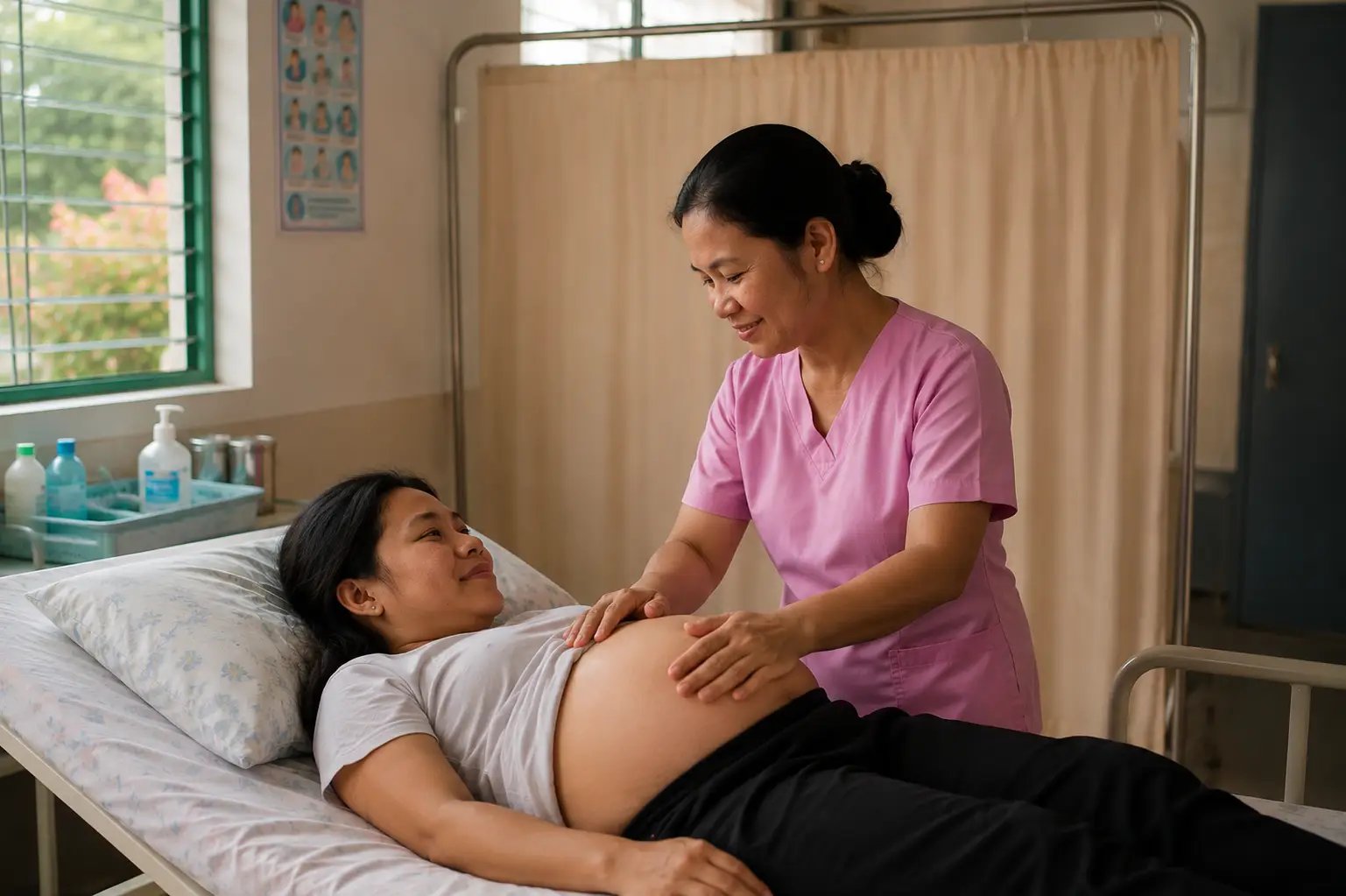
Maternal and newborn health in the Philippines is governed by an interlocking set of laws, administrative orders, and clinical protocols that together define the minimum standard of care and the obligations of every health facility, health worker, and program implementer in the country. Understanding this framework is not optional for organizations working in maternal and newborn health programs. It is the baseline against which program design, facility standards, and service delivery protocols are measured.
The Philippines has developed its maternal and newborn health policy framework incrementally, with each major law and administrative order building on those before it. The result is a layered architecture in which the Responsible Parenthood and Reproductive Health Act of 2012 sets the rights-based foundation, the First 1,000 Days Law of 2018 institutionalizes the nutrition and health services continuum, and the Universal Health Care Act of 2019 provides the financing and systems architecture within which all maternal and newborn services must now be delivered.
Beneath these framework laws sit a set of DOH administrative orders that translate legislative intent into clinical and programmatic standards. The two most foundational are AO 2008-0029, which established the Maternal, Newborn, Child Health and Nutrition strategy, and AO 2009-0025, which institutionalized the Unang Yakap essential newborn care protocol. Understanding how these instruments interact is essential for any organization designing a program, supporting a government partner, or conducting a facility assessment in the maternal and newborn health space.
| Instrument | Year | Primary Focus |
|---|---|---|
| Republic Act No. 10354 (RH Law) | 2012 | Universal access to reproductive health services including maternal care, family planning, and newborn health |
| DOH Administrative Order No. 2008-0029 | 2008 | MNCHN strategy for rapid reduction of maternal and neonatal mortality through integrated service delivery |
| DOH Administrative Order No. 2009-0025 | 2009 | Unang Yakap (Essential Newborn Care) protocol — four time-bound interventions for every birth |
| Republic Act No. 10028 | 2009 | Expanded Breastfeeding Promotion Act — workplace and facility breastfeeding support |
| Republic Act No. 11148 | 2018 | First 1,000 Days Law — health and nutrition services from pregnancy through the child's second birthday |
| Republic Act No. 11223 (UHC Act) | 2019 | Universal health care — financing, HCPN formation, PhilHealth coverage including maternity benefits |
| PhilHealth Circular No. 2026-0005 | 2026 | Rationalization of case rates for maternal and gynecologic services in hospitals |
| PhilHealth Circular No. 2026-0006 | 2026 | Expansion of maternity care benefits for non-hospital and outpatient facilities |
Republic Act No. 10354, the Responsible Parenthood and Reproductive Health Act of 2012, was signed by President Benigno Aquino III on December 21, 2012 and took effect January 17, 2013. It is the foundational rights-based legislation governing reproductive health in the Philippines and contains substantive provisions on maternal care that remain in force and operative for health programs today.
Under RA 10354, all local government units are mandated to hire skilled health professionals for maternal care and to establish or upgrade facilities to provide essential maternal health care services. All public health facilities must provide comprehensive maternal care including prenatal, intrapartum, and postnatal services. The law explicitly prohibits any health facility from refusing to accept patients in emergency obstetric situations regardless of the patient's ability to pay, a provision that has direct operational relevance for facilities in every HCPN.
The law survived Supreme Court challenges in 2013 and 2014. In April 2014, the Court upheld most provisions of the law while striking down a small number of implementing regulations. The law's core mandates on maternal care, skilled birth attendance, and emergency obstetric services were not among the provisions affected by the Court's ruling and remain fully in effect. As of 2025, a House Bill (HB 05441) has been filed seeking to repeal RA 10354, but this bill has not been enacted into law. RA 10354 remains the operative legislation.
For organizations designing or supporting maternal health programs, RA 10354 establishes several non-negotiable service standards. Prenatal care must include information and services on maternal nutrition, birth preparedness, and danger sign recognition. Skilled birth attendance must be promoted and supported. Postnatal care must be provided to both mother and newborn. Emergency obstetric care must be accessible and must not be withheld on the basis of inability to pay. Family planning counseling must be integrated into maternal care services and offered on a voluntary, informed consent basis. Health workers must not discriminate against patients based on religious, ethnic, or other grounds in the provision of reproductive health services.
DOH Administrative Order No. 2008-0029, issued by the Department of Health in 2008 under the title "Implementing Health Reforms for Rapid Reduction of Maternal and Neonatal Mortality," established the Maternal, Newborn, Child Health and Nutrition strategy as the primary operational framework for Philippine public health programming in these areas. It remains one of the most important policy documents governing how maternal and newborn services are organized and delivered at the facility and community level.
AO 2008-0029 introduced the core concept of the service delivery network for maternal and newborn health, defining the roles of different facility types in a tiered referral system. Basic Emergency Obstetric and Newborn Care (BEmONC) facilities provide the first level of emergency response for obstetric complications. Comprehensive Emergency Obstetric and Newborn Care (CEmONC) facilities provide the full package of emergency obstetric services including caesarean section, blood transfusion, and treatment of severe pre-eclampsia. This BEmONC/CEmONC tiering system remains the standard classification for maternal health facilities in the Philippines and is used in DOH facility assessments, PhilHealth accreditation, and program design.
The BEmONC/CEmONC distinction is operationally significant. A program that counts all accredited facilities without distinguishing BEmONC from CEmONC capacity cannot accurately assess the maternal health service coverage gap. The DOH Health Facility Development Plan 2020-2040 identified BEmONC and CEmONC gaps as among the most critical infrastructure shortfalls in the Philippine health system.
The MNCHN strategy defined the core package of maternal and newborn services that every Filipino woman and newborn is entitled to receive, organized along the continuum of care from pre-pregnancy through the postnatal period. This core package remains the reference standard for maternal and newborn health program design across DOH, PhilHealth, and international development programs operating in the Philippines.
DOH Administrative Order No. 2009-0025, "Adopting New Policies and Protocol on Essential Newborn Care," is the policy instrument that institutionalized the Unang Yakap (First Embrace) protocol as the mandatory standard of newborn care in all DOH-accredited health facilities in the Philippines. It was developed following a landmark 51-hospital study commissioned by the DOH and WHO in 2008, which documented the widespread use of harmful and unnecessary newborn care practices across Philippine health facilities.
The Unang Yakap protocol defines four time-bound core interventions that must be performed in every birth, in the prescribed sequence, regardless of facility type or delivery mode.
| Intervention | Timing | Evidence Basis |
|---|---|---|
| Immediate and thorough drying of the newborn | First 30 seconds after birth | Stimulates breathing, prevents hypothermia |
| Uninterrupted skin-to-skin contact | Immediately after drying, for at least 90 minutes | Thermal regulation, early breastfeeding initiation, bonding |
| Properly timed cord clamping and cutting | After cord pulsation stops or at least 1 to 3 minutes after birth | Prevents iron deficiency anemia, increases hemoglobin levels |
| Non-separation of mother and newborn for early breastfeeding initiation | Within the first hour after birth | Breastfeeding establishment, newborn protection from hypothermia and infection |
Compliance with the Unang Yakap protocol is a standard component of DOH facility licensing assessments and PhilHealth accreditation inspections for birthing facilities. Facilities that fail to implement the protocol as prescribed are subject to corrective action requirements. The protocol applies to all births in DOH-accredited facilities — vaginal deliveries and caesarean sections, in hospitals and birthing centers.
A published evaluation of Unang Yakap implementation found a 52 percent reduction in the neonatal mortality rate in hospitals that implemented the full protocol compared to those that did not, based on pre- and post-implementation data from participating facilities. This evidence base gives the protocol significant weight in program design and facility strengthening activities.
https://elibrary.judiciary.gov.ph/thebookshelf/showdocs/10/49220
Republic Act No. 11148, the Kalusugan at Nutrisyon ng Mag-Nanay Act, was signed into law on November 29, 2018. It is the primary legislation governing health and nutrition services during the first 1,000 days of life — from conception through the child's second birthday — and it extends the scope of maternal health programming from delivery into the critical period of early childhood that determines lifelong health and development outcomes.
RA 11148 is organized around a comprehensive package of interventions defined along three phases: prenatal, intrapartum and neonatal, and the period from birth to 24 months. For maternal health programs, the prenatal package under the law is particularly detailed. It mandates prenatal care visits that include maternal immunization, oral health assessment, iron and folic acid supplementation, calcium supplementation, micronutrient supplementation, nutritional counseling, birth preparedness planning, anti-helminthic treatment where indicated, and counseling on breastfeeding and rooming-in. The law explicitly requires that these services be provided in a manner compliant with the Mother and Baby-Friendly Health Facility Initiative.
RA 11148 is the legislative basis for the First 1,000 Days as a national programming priority. Programs focused on maternal nutrition, stunting prevention, and early childhood development are grounded in this law. It also strengthens the Milk Code (Executive Order 51) and the Expanded Breastfeeding Promotion Act (RA 10028), giving these instruments greater legislative backing.
The law mandates a multisectoral approach involving the DOH, DSWD, DepEd, DA, DILG, and LGUs in the implementation of the First 1,000 Days program. It establishes a National Steering Committee chaired by the Secretary of Health and a Technical Working Group responsible for program coordination and monitoring. Local government units are required to integrate First 1,000 Days programming into their local health and development plans and to allocate local funds for its implementation.
https://elibrary.judiciary.gov.ph/thebookshelf/showdocs/2/86373
https://nnc.gov.ph/luzon-region/ra-11148-kalusugan-at-nutrisyon-ng-magnanay-act/
Republic Act No. 11223, the Universal Health Care Act of 2019, does not contain detailed clinical provisions for maternal care. What it does is transform the systems architecture within which all maternal and newborn services — including those mandated by RA 10354, RA 11148, and the DOH administrative orders — must be delivered.
Under the UHC Act, every Filipino woman is automatically enrolled in PhilHealth, giving her legal entitlement to the National Health Insurance Program's maternity benefit package from the moment of conception. All facilities providing maternal care must be organized into Health Care Provider Networks and operate within the integrated provincial or city health system. The Special Health Fund at the provincial level is the primary pooling mechanism for maternal health financing at the local level. PhilHealth's role as strategic purchaser means that the content of the maternity benefit package, and what PhilHealth will and will not reimburse, directly shapes the services that facilities actually deliver in practice.
The UHC Act also provides the legal framework for the PhilHealth maternity benefit expansions announced in April 2026 under Circular Nos. 2026-0005 and 2026-0006. These circulars, which tripled normal delivery case rates to PHP 29,000 and doubled the number of covered antenatal visits to eight, are the most significant single expansion of maternal health financing in the country's history. They are discussed in detail in the companion article on the PhilHealth Maternal Care Benefit Package.
For organizations designing and implementing maternal and newborn health programs in the Philippines, this legal and policy framework translates into a set of practical requirements that must be reflected in program design, facility standards, and service delivery protocols.
Any program targeting maternal or newborn health outcomes must be designed against the MNCHN core package as the baseline. Gaps between what the program delivers and what the package requires are programmatic weaknesses that evaluators, donors, and government counterparts will identify. Programs should explicitly map their service delivery against the MNCHN package and document how gaps are addressed through referral linkages within the HCPN.
Any program that involves facility strengthening, capacity building for health workers, or facility assessment must address Unang Yakap protocol compliance as a standard component. The protocol is legally mandated, its evidence base is strong, and its non-implementation is a citable licensing violation. Assessors must be trained on the four core interventions, the prescribed sequence, and the documentation requirements.
Programs addressing maternal nutrition, infant feeding, stunting prevention, or early child development should align explicitly with RA 11148 and the First 1,000 Days framework. This includes the prenatal service package, the intrapartum and neonatal package, and the post-birth nutrition and health services through 24 months. Programs that address only the pregnancy and delivery phase without connecting to the postnatal and early childhood continuum are not fully aligned with the law's intent.
Programs operating within the UHC framework must support PhilHealth enrollment for all pregnant women, particularly those in the informal sector and geographically isolated areas, and must ensure that program beneficiaries understand and can access their PhilHealth maternity entitlements under the expanded 2026 circulars.
The RH Law's repeal bill (HB 05441) was filed in the House of Representatives in October 2025. As of the time of writing, it has not been enacted. Organizations should monitor its progress and assess implications for program design if the bill advances. Under current law, RA 10354 remains fully operative and its maternal health provisions are binding on all public health facilities and LGUs.
Designing a Maternal or Newborn Health Program in the Philippines?
SPHERES, Inc. provides technical assistance in maternal and newborn health program design, policy alignment, facility assessment, and implementation support across the Philippines.
Get in Touch