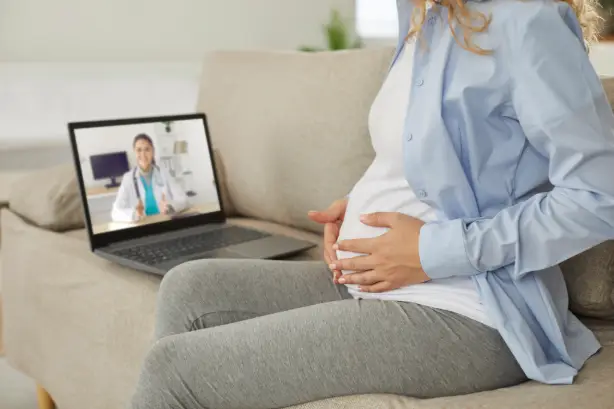
In 2024, the Philippine Statistics Authority recorded 1,852 maternal deaths, placing the country's maternal mortality ratio at 119 deaths per 100,000 live births. The United Nations SDG target for 2030 is 70. That gap represents hundreds of women dying every year from conditions that are, by the evidence, largely preventable. Mobile health and telemedicine programs are being introduced with increasing frequency across Philippine local government units as tools to close that gap, from provincial government apps to UN-backed service networks. But in a field where app downloads often substitute for outcome data, the more important question is not whether these programs are being launched. It is whether they are being designed well enough to actually work.
The Philippines has made measurable progress in maternal health. A peer-reviewed ecological study published in the Oxford journal International Health in 2026, using panel data from the Department of Health and the Philippine Statistics Authority across 2010 to 2019, found that the national maternal mortality ratio declined from 74.85 to 57.19 deaths per 100,000 live births over that decade. Facility-based deliveries increased by 39.57 percent nationally. Births attended by medical doctors rose by 19.01 percent. These are real gains.
What the same study also found, however, is that these national gains mask dramatic subnational disparities. Maternal mortality ratios across Philippine provinces ranged from 29 to 152 deaths per 100,000 live births in the study period, a fivefold difference. The Bangsamoro Autonomous Region in Muslim Mindanao records maternal mortality rates approximately twice the national average. And the progress that was achieved came not from a uniform national trend but from specific service types: antenatal care utilization in Luzon and postpartum care in Mindanao were the service categories attributable to measurable mortality reduction in 2019.
This finding matters because it shapes what telemedicine for maternal health in the Philippines should actually be trying to do. It is not a platform deployment problem. It is a care continuity problem. The evidence points specifically to increasing the frequency and quality of contact between mothers and providers, at the antenatal and postpartum stages, in the regions where that contact is most consistently missed.
Any honest discussion of maternal telemedicine in the Philippines has to start with the recognition that this country has been building digital health tools for maternal care since the early 2000s. Long before terms like "mHealth" and "digital health transformation" entered the vocabulary of international development, Filipino health informaticists and public health practitioners were building systems to address the same fundamental problem: a geographically fragmented country with chronically understaffed rural health units, where health data was unreliable and antenatal follow-up was inconsistent.
| Platform | Developer / Lead Organization | Year | What It Does | Status |
|---|---|---|---|---|
| CHITS (Community Health Information Tracking System) | National Telehealth Center, University of the Philippines Manila | 2004 | Electronic medical records for rural health units; tracks maternal health indicators, vaccination rates, and chronic disease data | Operational; expanded nationally |
| WAH (Wireless Access for Health) | National Telehealth Center, UP Manila; public-private partnership with multiple LGU partners | 2009 | Capacitates LGUs and barangay health workers in mobile data collection; generates quality health data for local decision-making | Operational; multiple sites |
| eHATID LGU | National Telehealth Center, UP Manila | 2014 | Android-based health information system and decision-support application for local government health offices | Deployed in select LGUs |
| DigiVacc | UNICEF Philippines; funded by Government of Japan; integrated with DOH | 2025 | Digital immunization tracking suite; handed over to DOH in 2025 to strengthen fully-immunized child coverage | Active; DOH-owned |
| GobSol App | Medala Corporation in partnership with the Provincial Government of Laguna | 2025 | Free Android telemedicine platform; consultations, e-prescriptions, digital health records, medicine delivery via Padala ni GOBSOL Rider App | Active; piloted across 6 Laguna LGUs, expanding to all 30 |
A qualitative study published in PMC in 2024 that evaluated CHITS, WAH, and eHATID LGU found that these early platforms consistently addressed four institutional needs: the absence of a functional health information management system, the inability of LGUs to plan from reliable data, the time burden of manual report submission on health workers, and the inaccuracy of health data caused by inadequate recording systems. CHITS in particular demonstrated that automating reports and improving data accuracy enabled public health facilities to track key indicators including maternal health outcomes with a quality previously unavailable to them.
These platforms did not reach every Filipino mother. But they built the institutional capacity, the human experience with digital health tools, and in some cases the infrastructure on which newer programs like GobSol are built. Understanding that history is important because it prevents the error of treating GobSol as if it were launching into a vacuum.
The peer-reviewed literature on mobile health and telemedicine for maternal care in low- and middle-income countries is now substantial. A 2024 systematic review of systematic reviews published in the Journal of Medical Internet Research found that mHealth apps show positive associations with antenatal care attendance, breastfeeding initiation, and skilled birth attendance across multiple contexts. A 2022 scoping review published in PMC found that mHealth interventions for maternal and child health care have been applied extensively worldwide, with the most prominent improvements in infectious diseases and maternal health. A separate scoping review published in TPM journal in 2025 found that mHealth interventions, particularly SMS reminders, improved antenatal care attendance, institutional deliveries, and vaccination coverage in rural areas of low- and middle-income countries.
These are encouraging patterns. The challenge is that patterns across large literature syntheses can obscure what actually happens in specific programs. The following four programs represent the strongest available evidence from specific, evaluated interventions in comparable country contexts, each implemented by identifiable organizations with published results.
Several findings emerge consistently across this body of evidence. First, programs anchored in existing government health systems and clinical encounters reach more mothers and sustain higher coverage than standalone donor-funded applications. Second, the effectiveness of mobile health tools in low-income settings is consistently mediated by whether a trusted local human being bridges the gap between the technology and the mother. Third, programs that measure app registrations and message delivery rates without tracking clinical outcomes cannot demonstrate whether they are actually improving health.
A 2019 paper published in JMIR mHealth and uHealth examining the Mobile Alliance for Maternal Action, a four-year program implemented across Bangladesh, South Africa, India, and Nigeria, found that linking a mobile messaging intervention to actual clinical health outcomes proved extremely difficult. In one country, only 24 percent of maternal health cards had any entry for hemoglobin levels. Without reliable clinical data, evaluators could measure how many messages were sent but could not determine whether babies were healthier or mothers were surviving.
There is also a documented risk on the equity side. A global mixed-methods study of over 1,000 maternal and newborn health professionals published in BMJ Global Health in 2021 examined what happened when health systems rapidly shifted prenatal care to telemedicine during COVID-19. Two-fifths of providers reported receiving no guidance on safe telemedicine delivery. The women who were already hardest to reach in person were the same women who could not access a video call. Without explicit inclusion design, telemedicine can concentrate benefits among those who already have the best access to care.
On November 5, 2025, Laguna Governor Sol Aragones launched the GOB SOL App at a public event in Santa Cruz, Laguna, personally demonstrating the platform to media and provincial stakeholders. The app, developed by Medala Corporation and offered free to residents on Android, provides online medical consultations with doctors and specialists, electronic prescriptions, digital health records, real-time appointment notifications, and delivery of free medicines through the companion Padala ni GOBSOL Rider App. Specialist consultations are scheduled on Mondays and Wednesdays from 9 AM to noon. Pilot coverage began November 10, 2025 across six municipalities: San Pablo, Calamba, Santa Rosa, Cabuyao, Los Baños, and Mabitac, with provincial-wide expansion planned.
The app is the digital interface for a broader ecosystem. The Akay ni Gob Botika physical pharmacy network, which GobSol connects patients to, reached all 30 LGUs in Laguna as of March 2026, providing free maintenance medicines to qualified residents with chronic conditions. This integration matters: the most common failure of telemedicine programs in low-resource settings is providing clinical advice without ensuring the recommended treatment is accessible. GobSol's design attempts to close that loop by connecting digital consultation directly to physical medicine access.
The GobSol model has two design characteristics that the international evidence consistently identifies as predictors of success. First, it is owned and funded by the provincial government with clear political commitment from the governor rather than a donor-funded project with an expiry date. Second, it connects digital consultation to free medicine dispensing, addressing the access barrier that often renders telemedicine advice practically useless in poor communities.
GobSol is not operating in isolation. UNFPA Philippines is implementing a parallel initiative in Laguna called WomenX, described on the UNFPA Philippines website in April 2026 as an effort to transform maternal health by addressing the root causes of preventable maternal deaths. WomenX integrates public and private providers into coordinated service delivery networks and leverages digital innovations including telemedicine to ensure women receive timely, continuous, and quality care across the entire maternal health journey, from first antenatal visit to postnatal follow-up.
The initiative specifically targets preventable maternal complications, with a focus on hypertensive disorders of pregnancy including pre-eclampsia and eclampsia. UNFPA has actively sought implementing partner organizations with experience in healthcare delivery, telemedicine, and reproductive health programs, specifically naming the GobSol App as the telemedicine platform to be integrated and scaled within the WomenX framework.
The combination of a government-owned telemedicine platform and a UN agency providing technical backstopping, monitoring frameworks, and implementing partner support mirrors, in Philippine terms, the model that made MomConnect in South Africa so effective: government infrastructure and accountability combined with technical support and quality assurance from an experienced development partner.
Laguna is not a uniformly urban, well-connected province. It includes peri-urban areas in the southern Metro Manila corridor and genuinely rural, disaster-prone municipalities, particularly in its eastern and southern reaches. It has an active governor with demonstrated political will, evidenced by the completion of Akay ni Gob Botika outlets in all 30 LGUs in under a year. And it now has both a government-owned telemedicine platform and a UN agency providing technical support for its most critical maternal health application.
If this model works in Laguna, it provides a replicable template for other provinces. If it fails, the failure will be instructive: the most common points of program breakdown in the evidence are inadequate inclusion of the most vulnerable mothers, absence of a trusted human intermediary between the platform and the patient, and failure to track clinical outcomes rather than platform metrics.
The accumulated evidence from the Philippines' own digital health history and from the international literature reviewed above points to a set of design principles that reliably distinguish effective maternal telemedicine programs from those that generate registrations without improving health.
At 119 maternal deaths per 100,000 live births in 2024, the Philippines needs to reduce its maternal mortality ratio by 41 percent in six years to reach the SDG target of 70 by 2030. PhilHealth has responded by expanding maternity care benefits, explicitly acknowledging the alarming maternal death figures and extending coverage for antenatal care to eight check-ups and diagnostics, step-up referral for complications, and postpartum care visits after discharge. This is the right direction. But benefit expansion without service delivery improvement changes nothing for the mother in a municipality where the rural health unit cannot accommodate the visits.
This is precisely the problem that well-designed telemedicine programs can help address. Not as a replacement for skilled human care, which remains irreplaceable, but as a system that keeps mothers in contact with providers between facility visits, that flags high-risk cases before they become emergencies, and that reduces the friction of postpartum follow-up that the evidence shows is associated with lower maternal mortality in Mindanao and Luzon.
The Laguna experiment with GobSol and WomenX is the most serious provincial-level test of maternal telemedicine the Philippines has run to date. It has the right structural features: government ownership, UN technical backing, integration between digital consultation and physical medicine access, and a focus on the specific clinical conditions that kill mothers. What will determine whether it contributes to reducing the 119 is whether the program is designed to reach the mothers who cannot reach the program, whether Barangay Health Workers are systematically deployed as bridges between the technology and the most vulnerable communities, and whether the monitoring system tracks clinical outcomes rather than platform metrics.
If those conditions are met, Laguna will have something worth replicating. If they are not, the province will have a well-designed app that serves the mothers who already have the most access, leaves behind those with the least, and contributes another data point to the long list of digital health programs that generated press releases without saving lives.
The evidence from twenty years of global mHealth research and two decades of Philippine digital health experience is clear on what works. The question now is whether the programs being designed and funded in 2025 and 2026 have learned from it.