
On April 30, 2026, President Ferdinand Marcos Jr. announced the largest single expansion of PhilHealth maternity benefits in the program's history. Normal delivery case rates nearly tripled. Caesarean section coverage increased by more than 60 percent. The number of covered antenatal visits doubled from four to eight. Postnatal care was covered as a standalone benefit for the first time. For health programs, implementing partners, and facilities working in maternal care, understanding exactly what changed, what is now covered, and where the gaps remain is essential operational knowledge.
The expansion was implemented through two PhilHealth circulars issued simultaneously on April 30, 2026. Circular No. 2026-0005 rationalized case rates for maternal and gynecologic services in the hospital setting. Circular No. 2026-0006 expanded maternity care benefits for non-hospital and outpatient facilities, covering rural health units, lying-in clinics, birthing homes, and PhilHealth YAKAP clinics. A revised version of Circular No. 2026-0006 (Revision 1) was published on May 12, 2026.
The announcement was described by President Marcos as driven by one goal: ensuring that no Filipino mother is forced to choose between safe childbirth and financial hardship. The expansion builds on a 50 percent case rate adjustment that took effect January 1, 2025, which itself was the first significant increase in PhilHealth delivery rates in years. The April 2026 expansion goes substantially further.
https://www.philhealth.gov.ph/circulars/2026/PC2026-0005.pdf
https://www.philhealth.gov.ph/circulars/2026/PC2026-0006.pdf
The 2026 expansion covers benefits across four distinct components of the maternity journey. Each component has its own case rate structure, eligibility conditions, and claiming requirements.
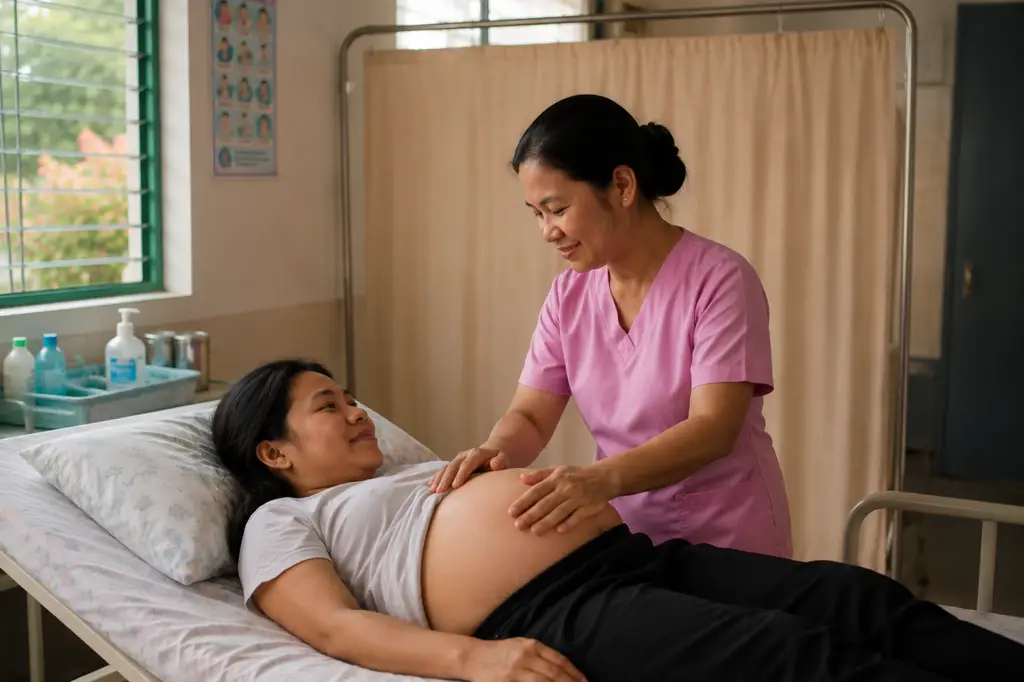
The antenatal care package covers up to eight prenatal visits for low-risk pregnancies. This doubles the previous coverage of four visits. Each covered visit includes routine laboratory tests, ultrasound procedures, essential vaccines including tetanus and diphtheria toxoid, and vitamins. The expanded ANC package is available at both hospital and non-hospital accredited facilities. To claim the full package, members must complete the minimum required visits and maintain documentation in their Mother's Book or hospital records.
The expansion of ANC coverage from four to eight visits directly addresses one of the most consistently cited gaps in Philippine maternal care. The DOH MNCHN strategy, the WHO recommendation for at least eight ANC contacts, and the evidence on ANC frequency and maternal mortality all point to the same conclusion: the previous four-visit coverage was insufficient. The 2026 expansion aligns PhilHealth coverage with the WHO standard for the first time.
The delivery benefit structure under the 2026 circulars is the most significant change in the expansion. For normal spontaneous deliveries in DOH-accredited Level 1 to Level 3 hospitals, the case rate is now PHP 29,000. This is a single unified package that replaces the previous split structure where the Maternity Care Package and the Normal Spontaneous Delivery package were claimed separately at approximately PHP 6,500 to PHP 8,000 each.
| Delivery Type / Setting | Previous Rate | 2026 Rate | Change |
|---|---|---|---|
| Normal spontaneous delivery (hospital, Level 1–3) | ₱9,750 | ₱29,000 | +198% |
| Caesarean section (hospital, medically indicated) | ₱37,050 | ₱58,000–₱62,000 | +57–67% |
| Normal delivery (infirmary / primary care facility) | ₱12,675 | ₱14,000 | +10% |
| Dilatation and curettage (post-miscarriage / hemorrhage) | ~₱16,500 (after 2025 adjustment) | Up to ₱36,500 | +121% |
| High-risk delivery complications (pre-eclampsia/eclampsia prevention) | Separate Z Benefit | ₱4,500 additional coverage | New add-on |
For caesarean sections, the tiered rate of PHP 58,000 to PHP 62,000 applies depending on the level of complication and the documentation by the attending physician. This range reflects the varying resource requirements of different caesarean procedures and is intended to reduce the financial gap that previously left even insured mothers with significant out-of-pocket costs for surgical delivery.
For the first time in PhilHealth's history, postnatal care is covered as a standalone benefit. Three distinct postnatal follow-up visits are now included. The standard scheduling is within 24 to 72 hours after discharge, at six weeks postpartum, and at twelve weeks postpartum. Each visit covers wound assessment for caesarean section mothers, breastfeeding support, newborn assessment, mood and mental health screening, and contraception counseling.
The significance of this change cannot be overstated. Postpartum hemorrhage, hypertensive disorders, and sepsis — the leading causes of maternal death in the Philippines — frequently manifest in the days and weeks after delivery, not during the hospital stay. The previous absence of covered postnatal visits meant that mothers were discharged from the facility with no guaranteed follow-up mechanism under the insurance system. The three covered visits create an accountability structure for postpartum monitoring that did not previously exist in the PhilHealth framework.
The newborn care benefit package was also updated as part of the 2026 expansion. The case rate for newborn care is now PHP 3,500, up from PHP 2,950. This covers the Newborn Screening Test and the Newborn Hearing Screening Test using specialized equipment including Otoacoustic Emission or Auditory Brainstem Response testing. Facilities must perform the hearing test using the specified equipment to claim the full amount. For premature and small newborns, the Z Benefits program provides additional coverage for pre-eclampsia and eclampsia complications.
The expanded maternity benefits apply to all active PhilHealth members and their qualified dependents at accredited facilities nationwide. Under the UHC Act's automatic enrollment provision, all Filipino citizens are PhilHealth members. However, to be eligible for benefits, members must have active contribution records. The circular confirms that immediate eligibility under PhilHealth Circular No. 2022-0013 — which grants PhilHealth coverage to members regardless of prior contributions for select conditions — applies to maternity cases.
Benefits apply across both public and private health facilities, provided the facility is PhilHealth-accredited as a maternal care provider. This equal coverage across public and private settings is a significant policy statement: it means that a mother who gives birth in a private hospital ward is entitled to the same PhilHealth coverage as one who delivers in a public hospital. President Marcos stated in his April 2026 announcement that ward deliveries, including in private hospitals, may now result in zero out-of-pocket cost for eligible members.
UNFPA Philippines welcomed the expansion, noting that the policy applies across both public and private health facilities and is expected to reduce out-of-pocket expenses and, in some cases, eliminate them entirely. UNFPA specifically cited financial barriers as a persistent driver of delayed or foregone maternal care. philippines.unfpa.org, April 30, 2026.
The Care Coordinator designation under Circular No. 2026-0006 is an important new feature for non-hospital facilities. Accredited maternal care providers at the outpatient and community level are required to designate a Care Coordinator responsible for ensuring member eligibility, facilitating claims, and coordinating referrals. Care Coordinators must notify PhilHealth of any changes within 30 calendar days. This requirement creates a new administrative role that community health organizations and birthing facilities need to fulfill to maintain accreditation under the expanded benefit structure.
The April 2026 expansion is the most significant advance in PhilHealth maternity financing in the program's history. It does not, however, eliminate all out-of-pocket maternal health costs. Understanding where gaps remain is essential for programs designing financial protection interventions or targeting the most financially vulnerable mothers.
The case rates cover the delivery procedure and associated clinical care. Medicines, supplies, and consumables beyond the standard package — including specific blood products, advanced wound care materials, and non-formulary drugs — may still be charged separately by facilities. Mothers with complications requiring additional medications or procedures beyond the case rate may still face supplemental charges.
The zero out-of-pocket commitment applies specifically to ward accommodation. Mothers who choose semi-private or private rooms will pay the difference between the ward rate and the chosen accommodation level. For lower-income members, ward accommodation is the only option fully covered by the expanded case rates.
Benefits are only payable at PhilHealth-accredited facilities. A significant number of births in the Philippines, particularly in geographically isolated and disadvantaged areas, still occur in non-accredited settings or are attended by traditional birth attendants without facility-based care. The expanded benefit package creates no protection for these births. Programs operating in GIDA communities need to combine benefit facilitation with facility accreditation support and community-to-facility referral strengthening to make the new benefits accessible to the most at-risk populations.
The automatic enrollment provision of the UHC Act gives all Filipinos legal PhilHealth membership. But the benefit eligibility requirements for the expanded maternity package depend on active contribution status. Informal sector workers, seasonal workers, and self-employed individuals who have irregular premium payment records may face eligibility gaps at the time of delivery. Programs supporting maternal care in informal sector communities should address PhilHealth enrollment facilitation and contribution continuity as part of their service package.
Out-of-pocket health expenditure in the Philippines still accounts for approximately 47.9 percent of current health expenditure. Even with the expanded maternity benefits, mothers in private accommodation, those at non-accredited facilities, and those with lapsed PhilHealth contributions will continue to face significant costs. The expanded package is a major step forward, not a complete solution to the financial barriers to maternal care.
The April 2026 expansion creates both opportunities and new obligations for organizations working in maternal health programming in the Philippines.
Programs targeting maternal health outcomes in low-income communities should now include active PhilHealth benefit facilitation as a program component. This means ensuring that pregnant women in the target population are enrolled in PhilHealth with active contribution records before delivery, are registered at an accredited facility for their ANC visits, understand their entitlement to eight covered ANC visits including vaccines and laboratory tests, and are connected to postnatal follow-up services covered under the three-visit postpartum benefit.
For programs working with community-level facilities, the expansion creates an incentive to support PhilHealth accreditation for lying-in clinics, birthing homes, and rural health units that are not yet accredited as maternal care providers. Accreditation unlocks access to the expanded benefit for the mothers these facilities serve and creates a sustainable financing stream that reduces dependence on project funds for service delivery.
The three covered postnatal visits represent a new entry point for postpartum programming. Programs focused on postpartum hemorrhage prevention, hypertensive disorder management, postnatal depression screening, and breastfeeding support now have a PhilHealth-backed framework to anchor their activities. Program designs should align postpartum interventions with the three covered visit schedule — within 72 hours, at six weeks, and at twelve weeks — to maximize the insurance coverage and minimize costs to beneficiaries.
Programs should update their M&E indicator sets to track benefit utilization as well as clinical outcomes. The proportion of enrolled members who complete eight ANC visits, the proportion who access their three postnatal visits, and the proportion who deliver at accredited facilities are now measurable against a specific PhilHealth framework and are directly linked to the country's progress toward the UHC Act's financial protection mandate.