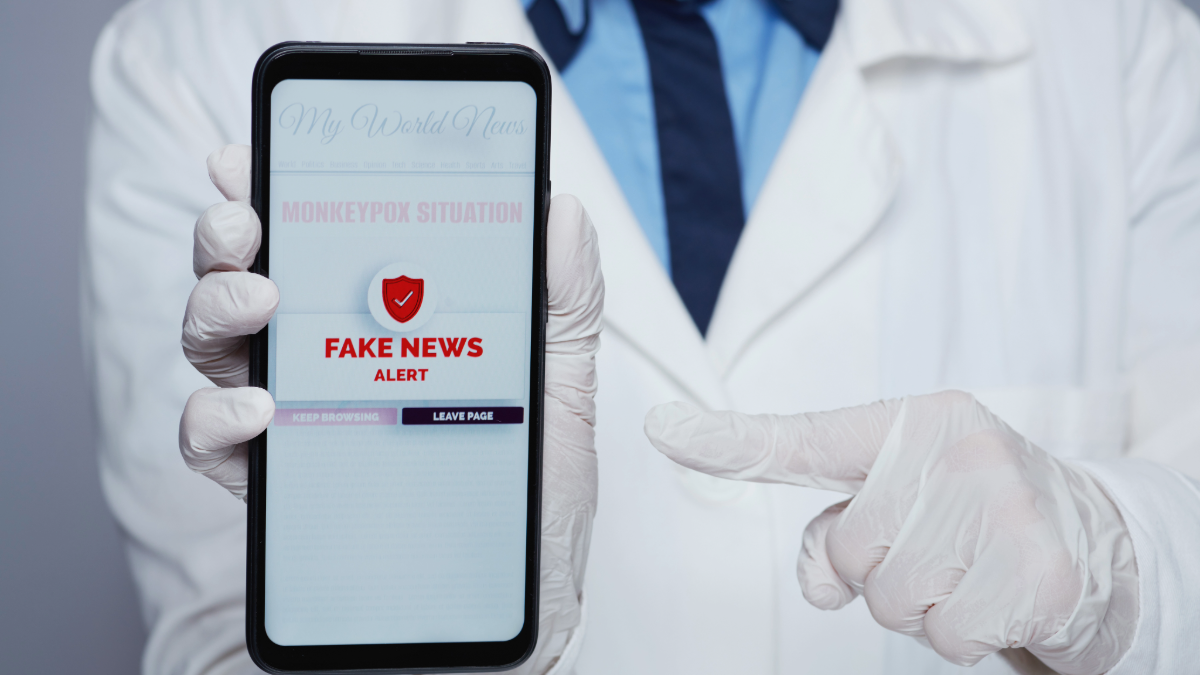
A fake post about a flu lockdown went viral on Facebook in October 2025, racking up more than 43,000 shares before it was debunked. The page that published it had been created just weeks earlier. No lockdown was ever imposed. But by the time the Department of Health (DOH) issued a correction, thousands of Filipinos had already changed their plans, forwarded the post to their families, or made health decisions based on information that was never true. This is what health misinformation does in the Philippines. And it is getting harder to spot.
The Philippines is one of the heaviest Facebook-using countries in the world, with the average Filipino spending close to 34 hours per week on social media platforms. Facebook functions as a primary news source for a large portion of the population. That combination, high usage and high trust, makes the country especially vulnerable to the rapid spread of false health information.
Health misinformation is not a new problem, but its consequences have become measurably severe. Childhood immunization rates in the Philippines fell from 87 percent in 2014 to 68 percent in the years following the Dengvaxia controversy of 2017, a period marked by an explosion of vaccine-related misinformation on social media. That decline was directly linked to a measles outbreak in 2019, with over 18,000 cases recorded compared to roughly 2,400 the year before. The Philippines also lost its 20-year polio-free status in 2019, a setback that public health experts have connected, at least in part, to the erosion of public trust in vaccines fueled by misinformation.
More recently, in 2025, false online reports claiming an international health concern linked to multiple respiratory infections prompted the DOH to issue a public clarification to counter the spread. That same year, a Facebook page with nearly a million followers repeatedly posted fabricated announcements about flu outbreaks, fake lockdowns, and class suspensions, with individual posts receiving tens of thousands of shares before fact-checkers could respond. In 2026, at least three separate Facebook pages were caught impersonating the DOH, spreading false claims about a "Cicada" COVID-19 variant and nonexistent lockdowns.
The pattern is consistent. Health misinformation in the Philippines spreads fast, reaches far, and causes real harm. Knowing how to recognize it before you share it is one of the most practical things you can do for your own health and for the people you care about. While this guide focuses on Facebook as the platform where health misinformation reaches the widest audience in the Philippines, the same verification habits apply to content encountered on TikTok, YouTube, Messenger, and other platforms where health claims circulate.
In October 2025, a fake Facebook page with 985,000 followers posted false lockdown announcements that were shared more than 43,000 times. The DOH confirmed no lockdown was ever planned. The page had been created less than two months before its posts went viral.
Health misinformation does not always look like an obvious hoax. It frequently appears in formats that seem credible, and it often uses real fears, real events, or real institutions to make false claims feel more believable. These are the types that surface most frequently on Philippine social media.
Fake pages and accounts use names, logos, and color schemes that closely resemble those of the DOH, the Philippine Food and Drug Administration (FDA), the Department of Social Welfare and Development (DSWD), and other agencies. These pages publish false advisories, fake lockdown announcements, and fabricated health bulletins. Some subscribe to Meta's paid verification program to add a checkmark, making them appear more legitimate. The DOH has repeatedly warned the public that it maintains only one official Facebook page and one official website, and that any other page using its name and logo is not affiliated with the agency.
Posts and paid advertisements promoting unregistered supplements, herbal concoctions, and cosmetic products as treatments or cures for serious conditions, including cancer, diabetes, arthritis, and sexual health issues, are widespread. Many of these posts use doctored videos featuring real doctors or news anchors to lend false credibility to their claims. A rheumatologist in Manila discovered that footage from her educational TikTok videos had been extracted and inserted into promotional posts for an unregistered arthritis supplement without her knowledge or consent. The Philippine Academy of Ophthalmology similarly found its name and logo being used to promote an unregistered eye drop brand. Its warning about the false posts received 57 interactions. The ads for the bogus product received nearly 34,000.
Posts that exaggerate or fabricate disease outbreaks, including false claims of new COVID-19 variants, invented epidemic alerts, and inflated case counts, generate fear and drive rapid sharing. These posts often use alarming language, vague attributions such as "a doctor said" or "according to health officials," and links that redirect to unofficial blogs or data-harvesting forms rather than verified sources.
Anti-vaccine content has circulated on Philippine social media for years and continues to resurface. False claims about vaccine ingredients, side effects, and deaths attributed to vaccination have been shared thousands of times. In Tarlac, posts falsely claiming that five people died after receiving a vaccine circulated widely just weeks after the relaunch of a polio immunization drive, causing parents to refuse vaccination in significant numbers. Many of these posts recycle or adapt content originally produced in other countries and repackage it with Filipino context.
Health misinformation is frequently entangled with political messaging in the Philippines. Claims about public health programs, budget cuts, corruption in health agencies, and the performance of health officials are often framed as health information but are designed primarily to influence political opinion. The 2025 Reuters Institute Digital News Report found that 67 percent of Filipinos considered the spread of disinformation a serious problem, reflecting an awareness that is not always matched by the ability to identify it in real time.
These seven questions work as a practical checklist for any health-related content you encounter on Facebook. You do not need to answer all seven for every post. In many cases, the first two or three will be enough to tell you whether the information is trustworthy.
Check the name of the Facebook page or profile that posted the content. Look at when the page was created, how many followers it has, and what else it has posted. A page created recently with a large following and a name that looks like a government agency is a significant warning sign. Go to the page's About section and look for a website link. Cross-check it against the official government agency website. The DOH's only official Facebook page is facebook.com/DOHgovPH. The FDA's is facebook.com/fdagovph.
Credible health information in the Philippines comes from the DOH, the FDA, the Philippine Health Insurance Corporation (PhilHealth), the World Health Organization (WHO) Philippines, professional medical societies such as the Philippine Medical Association (PMA), and peer-reviewed research. If a post makes a specific health claim and does not link to any of these, or if it attributes the claim vaguely to "experts," "doctors," or "studies" without naming them, it has not been verified.
Misleading health posts frequently use alarming headlines that overstate or contradict the body of the post, or use images and videos that have nothing to do with the claim being made. Read past the first line. If a video is embedded, watch it rather than relying on the caption. If the headline says "DOH confirms outbreak" but the post text makes no such confirmation and provides no link to a DOH statement, the post is misrepresenting what it claims to show.
Old health posts are frequently reshared without context, making outdated information appear current. A post warning about a measles outbreak from 2019 being reshared in 2026 is not new information, but it can cause unnecessary alarm if recipients assume it refers to a current situation. Check the original publication date. If the content involves an active health event, look for the DOH's most recent statement on the same topic to compare.
Any health product being sold or promoted online, including supplements, herbal medicines, cosmetics marketed as treatments, and medical devices, is required to be registered with the Philippine FDA. The FDA maintains an online verification portal where you can search for the registration status of any product by name or license number before buying or sharing a post about it.
Several organizations in the Philippines monitor health misinformation and publish fact-checks regularly. Before sharing a health post you are uncertain about, search the claim on Rappler's fact-check section, Vera Files, or PressOne.PH. The AFP Fact Check team also covers Philippine health misinformation extensively. A quick search with the key claim and the word "fact check" will often surface an existing review within seconds.
Misinformation is designed to provoke fast emotional responses, including fear, outrage, and a sense of duty to warn others, that override the instinct to verify. If a health post makes you feel an immediate urge to share it before you have had time to check it, that emotional urgency is itself a signal to pause. Misinformation spreads most effectively in the seconds between reading and sharing. That pause is where you have the most power to stop it.
While no single feature guarantees that a health post is false, the following characteristics appear consistently in verified cases of health misinformation on Philippine Facebook.
A Meta verification checkmark on a Facebook page does not mean its content is accurate. It only confirms that the page subscribed to Meta's paid authentication service. Fake health pages, including "DSWD Television," have used paid verification to appear more credible while publishing false information.
Knowing where to go for reliable health information is as important as knowing how to identify false claims. The following are verified, primary sources for public health information in the Philippines.
| Source | What It Covers | Where to Find It |
|---|---|---|
| Department of Health (DOH) | Disease alerts, health advisories, program announcements, immunization schedules | doh.gov.ph / facebook.com/DOHgovPH |
| Philippine FDA | Product registrations, safety alerts, advisories on unregistered products | fda.gov.ph / facebook.com/fdagovph |
| WHO Philippines | International health standards, disease surveillance, technical guidance | who.int/philippines |
| Philippine Statistics Authority (PSA) | National health statistics, mortality and morbidity data | psa.gov.ph |
| Rappler Fact Check | Verified fact-checks of viral health and news claims in the Philippines | rappler.com/newsbreak/fact-check |
| Vera Files | Independent fact-checking and media verification, including health claims | verafiles.org |
| AFP Fact Check Philippines | Multilingual fact-checks on health, social, and political misinformation | factcheck.afp.com |
| PressOne.PH | Investigative fact-checking with a focus on disinformation in the Philippines | pressone.ph |
Identifying a false health post is only the first step. What you do next determines whether the misinformation continues to spread through your network.
The most effective counter to health misinformation is not a public argument. It is a private, respectful conversation with someone who trusts you, accompanied by a link to a verified source.
Understanding why health misinformation spreads so effectively in the Philippines is not about assigning blame to those who share it. Most people who forward a false health post do so because they care about the people they are sending it to. That impulse, to protect and to inform, is exactly what misinformation is designed to exploit.
Facebook's algorithm surfaces content that generates strong emotional reactions because those reactions drive engagement, and engagement drives the reach metrics that the platform's advertising model depends on. A post that makes someone afraid, angry, or urgently concerned will naturally travel further and faster than a carefully worded DOH advisory. Fabricated health pages exploit this by producing content calibrated specifically for emotional response. They do not need to convince everyone. They only need enough people to share before the post is debunked.
The DOH, WHO, and the Department of Information and Communications Technology (DICT) have all recognized this dynamic and have invested in infodemic management capacity in recent years, including a training program conducted with WHO in late 2025 to build institutional capacity for monitoring and responding to health misinformation during emergencies. But institutional responses alone cannot outpace the volume of false content being produced. The most scalable intervention remains the individual decision, made millions of times each day, to pause and verify before sharing.
In 2025, the DOH conducted Social Web training with WHO to build internal capacity for infodemic management and risk communication. This investment reflects the recognition that health misinformation is now a formal public health challenge requiring a coordinated, evidence-based response.