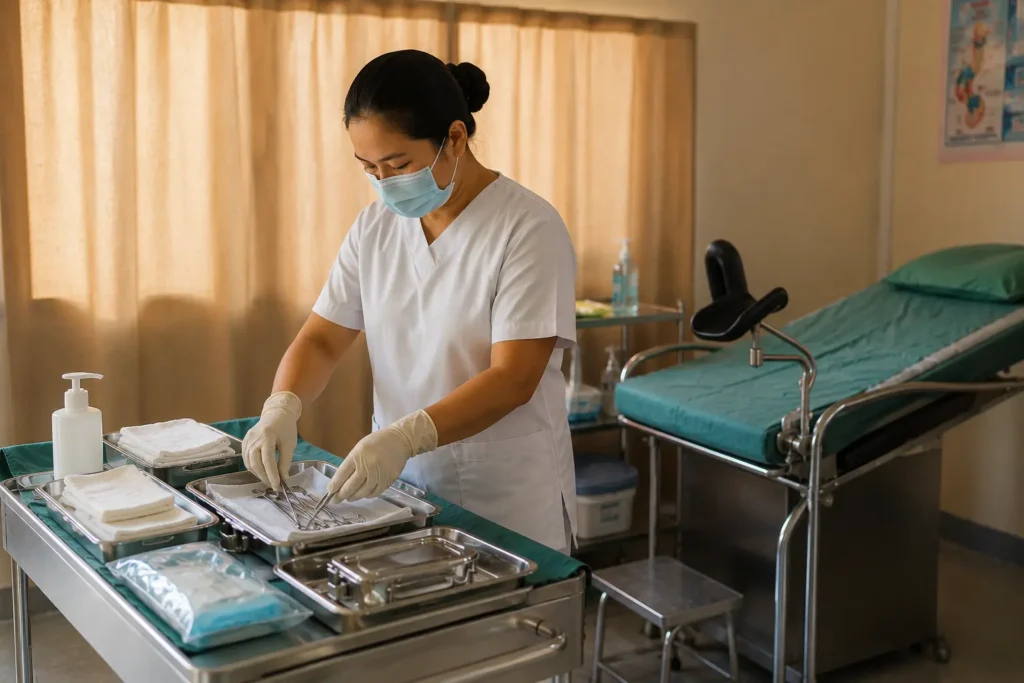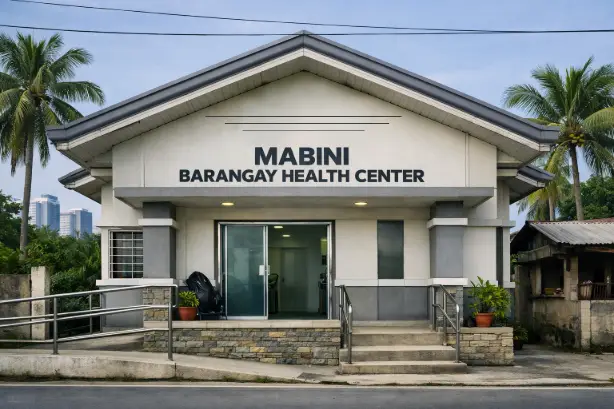
The difference between a facility that saves a mother's life during childbirth and one that does not often comes down to a single, invisible variable: readiness. SPHERES, Inc. has developed a standardized Maternal Health Facility Readiness (MHFR) Self‑Assessment Tool that converts that variable into measurable, actionable information. Built on global frameworks and Philippine standards, the tool guides facility teams through seven domains and over a hundred indicators, automatically producing a readiness scorecard and a prioritized improvement plan. The tool and its manual are not publicly downloadable; interested organizations are invited to contact SPHERES to discuss access and implementation support.
Public health campaigns in the Philippines rightly encourage pregnant women to give birth in a health facility. But reaching a facility is only the first two steps in the three‑delay model that underlies most maternal deaths. The third delay, receiving adequate care once inside, is entirely a function of whether the facility has trained staff, essential medicines, working equipment, and a functional referral pathway. While the first two delays can often be overcome by a family's determination or a tricycle ride, the third delay is a systemic failure that no amount of individual effort can fix. It hides in plain sight: a missing drug on the shelf, a broken blood pressure monitor, a referral line that rings but never connects to a hospital that can actually help.
Despite its importance, facility readiness is rarely measured systematically. Many facilities operate for years without a full picture of their own gaps, discovering them only during a crisis when there is no time left to respond. This self‑assessment tool breaks that cycle. It allows a facility to evaluate itself on an ordinary day, not during an emergency, so gaps can be closed before they become tragedies. The instrument is grounded in the World Health Organization's Service Availability and Readiness Assessment (SARA) and Harmonized Health Facility Assessment (HHFA), and it aligns with Department of Health standards under Administrative Orders 2012‑0012 and 2020‑0047, as well as the Universal Health Care Act.
Rather than a single checklist, the tool organizes 114 indicators into seven interconnected domains. The digital form automatically filters indicators by facility type — birthing home, rural health unit, private clinic, or hospital — so each team only sees what is relevant to their level of care. This adaptive design prevents the common frustration of sifting through dozens of hospital‑level questions that do not apply to a small barangay health station.
Each indicator is scored from 0 (Absent) to 4 (Fully Functional and Sustained), with clear means of verification. For example, an indicator under Domain 3 (Medicines and Commodities) might ask: "Is oxytocin available and stored correctly, and is there a record of at least one dose used or checked within the last three months?" The team must physically check the stock and logs, not just answer from memory. This evidence‑based scoring transforms readiness from a subjective feeling into an objective scorecard that can be compared across facilities and tracked over time.
Domain scores are then calculated as a percentage of the maximum possible for the facility type, and they roll up into an overall readiness rating.
The aggregate score places a facility into one of five levels, instantly communicating where it stands and what kind of response is needed. This classification helps local health managers prioritize which facilities need immediate support and which can serve as models for others.
| Score | Classification | Meaning |
|---|---|---|
| 85% and above | Highly Ready | Meets or exceeds standards. Focus on maintenance and continuous quality improvement. |
| 70% to 84% | Ready | Core services are in place but notable gaps remain. A targeted Facility Improvement Plan is needed. |
| 55% to 69% | Moderately Ready | Significant gaps across multiple domains. Systematic strengthening required. |
| 40% to 54% | Needs Improvement | Fundamental deficiencies exist. Immediate attention and substantial resource investment are necessary. |
| Below 40% | Critical Gap | Serious risk to maternal and newborn health. Urgent intervention is imperative. |
The accompanying MHFR Self‑Assessment Manual details every indicator, its means of verification, and the scoring logic. It also contains a Facility Improvement Plan template so that once gaps are identified, a concrete, time‑bound action plan can be developed immediately. Facility teams who gather the required documents — training certificates, inventory sheets, equipment maintenance logs — before sitting down with the digital form typically complete the entire assessment in about an hour.
Once the team selects the facility type, the form automatically presents only the relevant indicators. It captures the facility's GPS coordinates at the point of assessment, allowing the results to be placed on a map later. Crucially, the form cannot be edited after submission, ensuring that the data reflects an honest snapshot of that particular day. This design discourages "gaming" the assessment and builds a trustworthy baseline for improvement.
Upon submission, the system emails a Facility Readiness Scorecard directly to the facility team. The scorecard includes domain‑level scores, the overall readiness classification, and a list of the lowest‑scoring indicators. These weak points become the starting point for the Facility Improvement Plan; no need for a separate brainstorming session to figure out what to fix first.
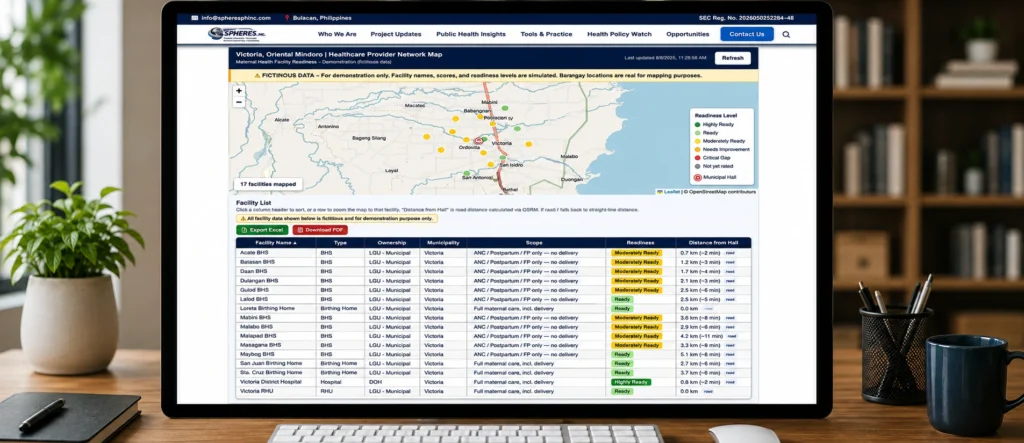
When multiple facilities within a Health Care Provider Network (HCPN) complete the assessment, their results and GPS coordinates can be viewed together on a consolidated map. This transforms individual facility reports into a network‑wide planning resource. A Provincial Health Office can see at a glance which referral pathways are fragile: for instance, if several barangay health stations show readiness scores below 40%, but the nearest hospital is "Highly Ready," the bottleneck lies at the primary care level. Resources can then be directed precisely where they are most needed, rather than spread thinly across the entire province.
Imagine a birthing home that scores "Moderately Ready," not failing, but not safe either. The scorecard reveals that Domain 3 (Medicines) and Domain 4 (Equipment) are the weakest. The improvement plan then focuses on two specific actions: procuring a reliable stock of oxytocin and repairing the delivery table's broken stirrup. Within a few weeks, the unit moves into "Ready" status, and the Municipal or City Health Office can prove, with data, that the facility is now prepared to handle a postpartum hemorrhage. That is the power of a self‑assessment that is honest, specific, and immediately linked to action.
Explore a sample map that demonstrates how facility readiness data is visualised on an interactive map and table. All data shown is fictitious and for demonstration purposes only.
View Sample Map →Whether you manage a single facility or an entire health network, the MHFR Self‑Assessment Tool can provide the clarity you need to strengthen maternal care. Contact SPHERES, Inc. through the website to discuss how the tool can be deployed in your context.
Contact SPHERES, Inc.